SimplyNoted vs. Scribeless 2026: Which Handwritten Mail Service Wins?

SimplyNoted vs Scribeless: Which Handwritten Mail Service Offers More Value?
In today’s digital world, where emails and automated messages dominate communication, handwritten notes have made a strong comeback. Businesses are increasingly turning to handwritten communication to stand out, build stronger customer relationships, and create a more memorable experience. A simple handwritten message can feel far more personal than a printed email, making it a powerful tool in direct mail marketing.
This is where services like simply noted and Scribeless come in. Both platforms help businesses send handwritten cards, letters, and personal messages at scale, without sacrificing efficiency. Whether it’s for customer appreciation, follow ups, or lead nurturing, these services aim to combine personalization with automation.
In this handwritten mail service comparison, the focus is on SimplyNoted vs Scribeless to understand which platform delivers better value. From handwriting quality to pricing, automation, and scalability, each service offers unique advantages depending on business needs.
See Also : 15 Ways to Say "I Appreciate You"
Why Handwritten Mail Still Works in Modern Marketing
Handwritten notes continue to be highly regarded because they create a personal touch that digital communication often lacks. In a crowded inbox, a handwritten letter or card stands out immediately. It feels authentic, thoughtful, and intentional, which is why many businesses send handwritten notes to strengthen customer relationships.
From a marketing perspective, handwritten communication plays a key role in customer retention and lead nurturing. A simple thank you card or follow-up message can leave a lasting impression and increase the likelihood of repeat business. Unlike printed mail, handwritten messages feel more genuine and help build stronger relationships over time.
There is also a clear difference between printed and handwritten content. Printed text can feel generic, while handwritten letters, with natural ink flow, slight variations in handwriting, and real pen marks, create a sense of authenticity. This difference matters when trying to make a message feel personal.
Businesses use handwritten mail for a variety of purposes, including:
Sending greeting cards and thank you cards
Personal outreach to clients and customers
Follow ups after meetings or purchases
Direct mail campaigns focused on customer appreciation
In each case, the goal is the same: create meaningful interactions that go beyond standard marketing messages.
Overview of Simply Noted

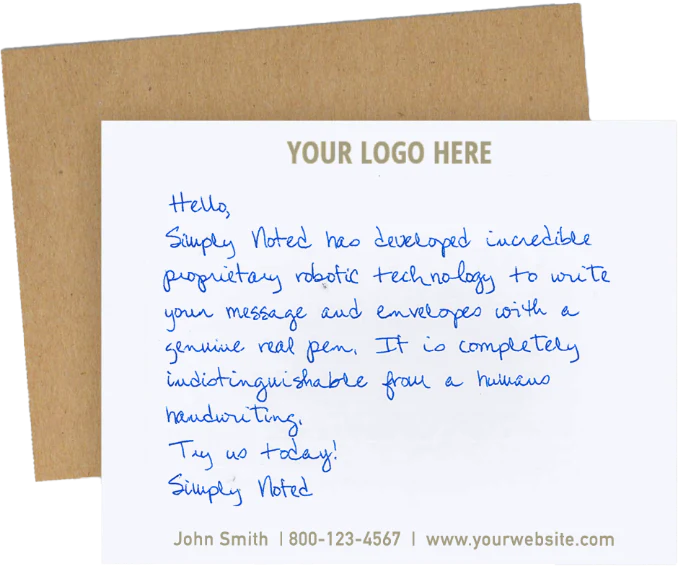
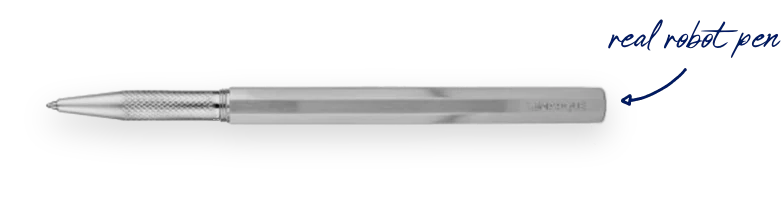
Simply noted offers a highly refined handwritten note service designed for businesses that want both authenticity and scale. The platform focuses on using real ballpoint pens and real ink, ensuring that every handwritten card or letter feels natural and personal.
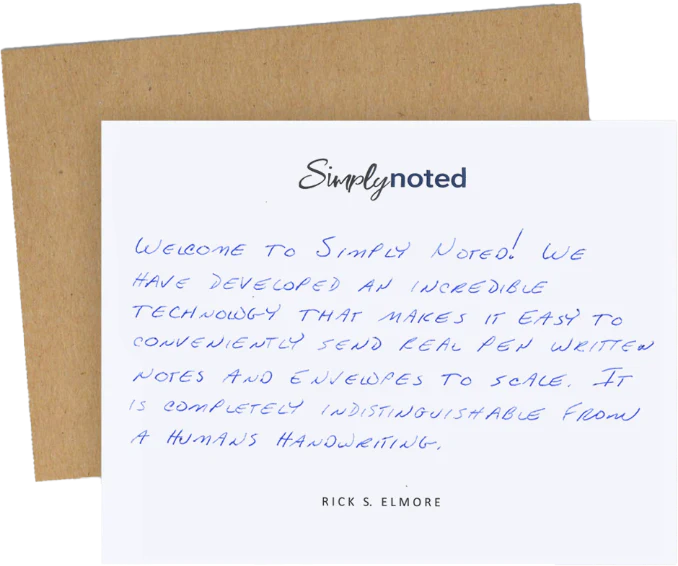
One of the key strengths of simply noted is its ability to replicate human handwriting with precision. Businesses can choose from multiple handwriting styles, allowing them to match the tone of their message. Whether it’s formal, casual, or friendly, the flexibility adds a layer of personalization that many services lack.
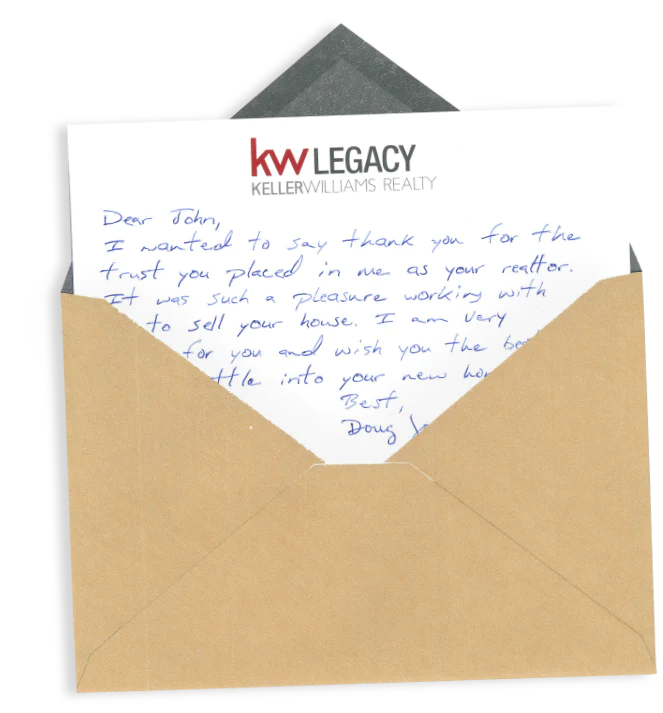
Another major advantage is branding. Companies can use their own logo, own cards, and even customized handwritten envelopes. This makes it easy to maintain brand consistency across all communication. With merge fields, businesses can personalize each message using customer data, making every note feel tailored rather than generic.
Simply noted offers strong automation features as well. The entire process, from uploading a recipient list to sending handwritten cards, is streamlined. This makes it ideal for recurring campaigns, follow ups, and large-scale direct mail marketing efforts.
For businesses looking for an enterprise handwritten note service, simply noted provides the tools needed to send handwritten messages efficiently while maintaining a high level of authenticity.
Overview of Scribeless
Scribeless is another popular handwritten note service that focuses on automation and scalability. It is designed primarily for businesses that want to run large direct mail campaigns without manually writing each note.
Instead of using real handwriting in the traditional sense, Scribeless uses advanced technology to create a handwritten style. The system mimics handwriting using machines that can produce consistent results across thousands of messages. This allows businesses to send handwritten letters at scale while maintaining a uniform appearance.
Scribeless is particularly strong when it comes to digital workflows. Users can upload recipient lists, create campaigns, and automate the sending process with minimal effort. This makes it a practical option for companies that prioritize efficiency and speed.
The platform also supports personalization through variable data fields, enabling businesses to include names, company details, and other custom elements in each message. This helps maintain a level of personalization even in large campaigns.
While Scribeless excels in scalability, its approach to handwriting may feel less authentic compared to real pen and ink solutions. However, for enterprise-level campaigns that require high volume and quick turnaround, it remains a competitive option.
See Aso: 9 Proven Ways to Win Back Lost Customers
SimplyNoted vs Scribeless: Key Differences (Comparison Table)
Feature |
Simply Noted |
Scribeless |
Handwriting Quality |
Real pen, real ink, natural variation |
Machine-generated handwritten style |
Personalization |
High (merge fields, own handwriting styles, own logo) |
Moderate (variable fields, limited style variation) |
Handwritten Note Service Pricing |
Competitive with strong value for authenticity |
Slightly higher cost for automation at scale |
Lead Times |
Moderate depending on volume |
Faster for bulk campaigns |
Card Designs |
Custom cards, own cards, branded options |
Standard templates with some customization |
Automation Capabilities |
Strong automation with personalization |
Highly automated for enterprise campaigns |
Integration Features |
CRM integrations, campaign tools |
API and automation-focused integrations |
This table highlights the key difference between authenticity and scalability when comparing Scribeless vs SimplyNoted.
Handwriting Quality: Real Pen vs Robotic Writing
One of the most important factors in any handwritten mail service comparison is handwriting quality. The difference between real pen writing and machine-generated handwriting can significantly impact how the message is perceived.
Simply noted uses real ballpoint pens, which means every note has natural ink variation, slight inconsistencies, and realistic line thickness. These small details make the message feel personal and authentic. When a recipient reads a handwritten card created this way, it closely resembles something written by hand.
On the other hand, Scribeless relies on machines to replicate handwriting. While the result may look neat and consistent, it often lacks the subtle imperfections that make handwriting feel real. The uniformity can sometimes make the message appear printed rather than handwritten.
This distinction matters because authenticity directly affects customer relationships. A message that feels personal can improve customer appreciation and build stronger relationships. In contrast, a message that feels automated may not have the same emotional impact.
In direct mail marketing, where the goal is to stand out and create memorable interactions, the quality of handwriting plays a critical role.
Personalization and Branding Capabilities
Personalization is at the core of any successful handwritten communication strategy. Both platforms offer ways to customize messages, but the depth of personalization varies.
Simply noted allows businesses to go beyond basic personalization. Companies can use their own handwriting styles, include their own logo, and design custom envelopes. This level of control ensures that every message aligns with the brand’s identity. With merge fields, businesses can create highly personalized messages that feel tailored to each recipient.
Scribeless also supports personalization through variable data fields. Businesses can insert names, company details, and other elements into each message. While this is effective for large campaigns, it may not offer the same level of flexibility in handwriting styles or branding options.
Branding is especially important in direct mail campaigns. A handwritten note that includes a company’s logo and consistent design can reinforce brand recognition while maintaining a personal feel. This combination of personalization and branding helps businesses create stronger connections with their clients and customers.
Ultimately, the choice depends on the level of personalization required. For businesses that prioritize authenticity and brand consistency, simply noted offers more flexibility. For those focused on scale and efficiency, Scribeless provides a streamlined solution.
See Also : 77 Best Congratulations Messages | Templates, Tips, & Tricks
Pricing Comparison: Which Offers Better Value?
When evaluating handwritten note service pricing, both platforms take different approaches based on their core strengths. Simply noted focuses on authenticity with real pen and ink, while Scribeless prioritizes automation and scale.
The cost per handwritten note or card typically depends on volume, customization, and campaign size. Simply noted offers competitive pricing considering the use of real ballpoint pens, handwritten envelopes, and higher-quality personalization. On the other hand, Scribeless may appear more cost-efficient for large direct mail campaigns due to its automated process.
Bulk and recurring campaigns play a major role in pricing. Businesses running ongoing follow ups or customer appreciation campaigns often benefit from discounted rates. Simply noted offers flexibility for recurring campaigns with strong personalization, while Scribeless is designed for high-volume enterprise campaigns.
Hidden costs should also be considered. These may include postage, envelope customization, card designs, and additional branding elements like own logo printing. Some services may appear lower in cost initially but increase depending on customization levels.
Ultimately, the discussion comes down to cost vs return. While one service may have a higher cost per note, the return on investment can be stronger if the message feels personal and improves customer relationships. In this case, authenticity often leads to better engagement and long-term value.
Ease of Use and Workflow Automation

Ease of use is critical when managing handwritten communication at scale. Both platforms aim to simplify the entire process, but their workflows differ slightly.
Simply noted offers a streamlined system where businesses can upload a recipient list, create personalized messages using merge fields, and send handwritten cards with minimal effort. The interface is designed to save time while maintaining a high level of customization.
Scribeless focuses heavily on automation. Campaign creation is quick, and users can upload large datasets to send handwritten letters efficiently. This makes it suitable for companies running frequent direct mail campaigns.
Integration capabilities are another important factor. Both services support API connections and integrations with CRM systems, allowing businesses to automate personal outreach, follow ups, and lead nurturing campaigns. This reduces manual work and ensures consistency.
For executive assistants and marketing teams, these tools can significantly reduce workload. Instead of manually writing hundreds of notes, businesses can create and send personalized handwritten messages in minutes. This balance between automation and personalization is what makes these platforms highly valuable.
Lead Times and Scalability
Lead times and scalability are essential when choosing a handwritten mail service, especially for businesses operating at scale.
Simply noted offers reliable production timelines while maintaining quality. Because it uses real pen and ink, lead times may vary slightly depending on order size and customization. However, the result is a more authentic handwritten message that feels personal.
Scribeless, on the other hand, excels in speed. Its automated system allows for faster production, making it ideal for bulk campaigns and time-sensitive direct mail marketing efforts.
When it comes to scalability, both platforms support sending handwritten cards at scale, but in different ways. Simply noted balances scale with authenticity, making it suitable for businesses that want to maintain a personal touch even in large campaigns. Scribeless is designed for enterprise readiness, where speed and volume are the primary focus.
Recurring campaigns are supported by both services. Businesses can automate follow ups, customer appreciation messages, and ongoing outreach efforts without repeating the setup process. This makes it easier to manage large recipient lists and maintain consistent communication.
Scribeless Review: Strengths and Limitations
A closer Scribeless review highlights its strengths in automation and enterprise-level functionality.
One of the key strengths of Scribeless is its ability to handle large-scale direct mail campaigns efficiently. Businesses can send handwritten messages to thousands of recipients with minimal manual effort. This scalability makes it an attractive option for enterprise companies.
Another advantage is its digital workflow. The platform allows users to manage campaigns, upload recipient lists, and automate processes quickly, saving time and resources.
However, Scribeless does have limitations. The most notable is the lack of true handwriting authenticity. Since the platform uses machines to replicate handwriting, the final result may feel less personal compared to notes written with a real pen.
Additionally, handwriting realism is limited. While the text may appear handwritten at first glance, the consistency in line thickness and structure can make it feel more like printed content rather than a genuinely handwritten message.
Use Cases: Which Service Fits Your Business?
Choosing between these platforms depends largely on business needs and campaign goals.
For small businesses, personalization often matters more than scale. A handwritten note that feels authentic can help build stronger relationships with clients and customers. Simply noted is well suited for this approach, especially for businesses focusing on customer appreciation and personal outreach.
For enterprise companies, scalability becomes a priority. Scribeless is designed for high-volume campaigns where speed and efficiency are essential. It works well for large marketing teams managing extensive recipient lists.
Sales teams can benefit from both platforms. Sending handwritten follow ups after meetings or deals can improve conversion rates and strengthen relationships. Simply noted offers a more personal touch, while Scribeless enables faster outreach at scale.
Customer appreciation campaigns are another key use case. Businesses looking to create memorable experiences may prefer real handwritten cards, while those focusing on volume may choose automated solutions.
In lead nurturing and retention strategies, both platforms can be effective. The choice depends on whether the focus is on authenticity or efficiency.
Pros and Cons of Simply Noted
Simply noted stands out for its focus on authenticity and personalization.
The biggest advantage is real handwriting. Using a real pen and ink creates a message that feels genuine and human. This enhances the emotional impact and makes handwritten communication more effective.
Another strength is strong personalization. Businesses can customize handwriting styles, use their own logo, and create tailored messages using merge fields. This flexibility helps maintain brand identity while delivering personal messages.
The emotional impact is also a key benefit. Handwritten notes created this way often feel more thoughtful, which can lead to stronger customer relationships and higher engagement.
The main drawback is cost. Because of the use of real pen writing and higher-quality materials, the price per note may be slightly higher compared to automated services. However, the added value often justifies the investment.
Pros and Cons of Scribeless
Scribeless offers a different set of advantages focused on scalability and efficiency. One of its main strengths is the ability to handle large campaigns. Businesses can send handwritten letters to thousands of recipients quickly, making it ideal for enterprise-level operations.
It is also well suited for automation. The platform simplifies campaign management and allows for quick execution of direct mail strategies.
However, the main limitation is authenticity. Since the handwriting is machine-generated, it may not feel as personal as messages written with a real pen.
There is also a risk that messages may feel printed rather than handwritten. This can reduce the emotional impact and affect how recipients perceive the message.
Which Service Delivers More Value?

When comparing SimplyNoted vs Scribeless, Simply Noted delivers more value for businesses that care about authenticity, personalization, and stronger customer relationships. While Scribeless focuses on automation and scale, Simply Noted creates handwritten notes that feel real, thoughtful, and memorable.
That difference matters in direct mail marketing. A message with real handwriting can make a stronger impression than written text that looks machine-produced. Even a simple thank you note can feel more personal and meaningful when it reflects genuine effort.
Although Simply Noted may have a slightly higher cost, the return often comes through better engagement, customer appreciation, and improved retention. For brands that want the best service for personal outreach, follow ups, and memorable communication, Simply Noted is the stronger choice.
SEE ALSO: 10 Get Well Soon Cards and Message Templates
Final Thoughts
Handwritten communication continues to be a powerful tool in modern marketing. In a digital-first environment, it offers a unique way to connect with clients and customers on a personal level.
Choosing between these services depends on specific business goals. Companies focused on building stronger relationships and delivering authentic experiences may benefit from real handwriting solutions. Those prioritizing efficiency and scale may lean toward automated platforms.
In the long term, the impact of handwritten notes goes beyond a single message. It helps build trust, improve customer retention, and create meaningful interactions that stand out. Whether used for direct mail campaigns, follow ups, or customer appreciation, handwritten communication remains one of the most effective ways to make a lasting impression.
FAQs
What is the difference between Simply Noted and Scribeless?
The main difference is authenticity and scale. Simply Noted uses real pen writing for handwritten notes that feel personal, while Scribeless focuses more on automation. In a handwritten mail service comparison, expect Simply Noted to deliver a more natural result than written text that looks machine-made.
Which handwritten note service is more affordable?
Pricing depends on volume, design, and postage. Scribeless can be cost-effective for bulk mail, while Simply Noted may cost more per piece because of real handwriting. The best service depends on whether the goal is lower cost, better quality, or stronger customer response.
Does handwritten mail improve customer retention?
Yes, handwritten mail can improve customer retention because it feels more personal than standard written text or email. Businesses use handwritten notes to create memorable touchpoints, strengthen relationships, and stand out in a digital world where personal communication is often missing.
Is Scribeless good for enterprise campaigns?
Yes, Scribeless is a strong option for enterprise campaigns that need scale and automation. It works well for large recipient lists, recurring outreach, and direct mail efforts. For example, companies sending thousands of notes may prefer its workflow, even if the handwriting feels less authentic.
Why do businesses send handwritten notes?
Businesses send handwritten notes to build trust, improve customer relationships, and make communication feel personal. They work well for thank you cards, follow ups, and lead nurturing. A handwritten message often feels more memorable and thoughtful than printed or digital outreach.