Personal Touch Marketing: Why a Handwritten Note Still Gets Read
Simply Noted writes and mails real pen-and-ink cards for businesses. See our handwritten direct mail service →
Quick answer: Personal touch marketing means reaching a customer in a way that's clearly meant for them and not for a list. A handwritten note is the strongest form of it, because it's hard to fake: a name written on the envelope, a real stamp, and a line about something that actually happened between you. People open it and read it, which is more than most email ever gets.
We write and mail handwritten cards for a living, so we see this every day. Over eight years we've worked with more than 10,000 businesses, from realtors and insurance agents to nonprofits and online stores. The ones that get the most out of it aren't the ones with the fanciest card design. They're the ones that send a short, honest note at the right moment.
So this guide stays practical. We'll cover what personal touch marketing actually is, why a handwritten note still gets read when so much else gets ignored, how handwritten and typed notes compare, and how to keep it personal once you're sending hundreds of notes a month instead of five.
What personal touch marketing actually means
A lot of what gets called personalization is a first name dropped into an email template. That's not a personal touch. The customer knows a system did it, and they treat it the way they treat any other automated message.
Personal touch marketing is different. It's anything a customer can tell a person meant for them: a call after a closing, a note after a first order, a card on the anniversary of the day they signed. The test is simple. Would this still make sense if you sent it to someone else? If it would, it isn't personal yet.
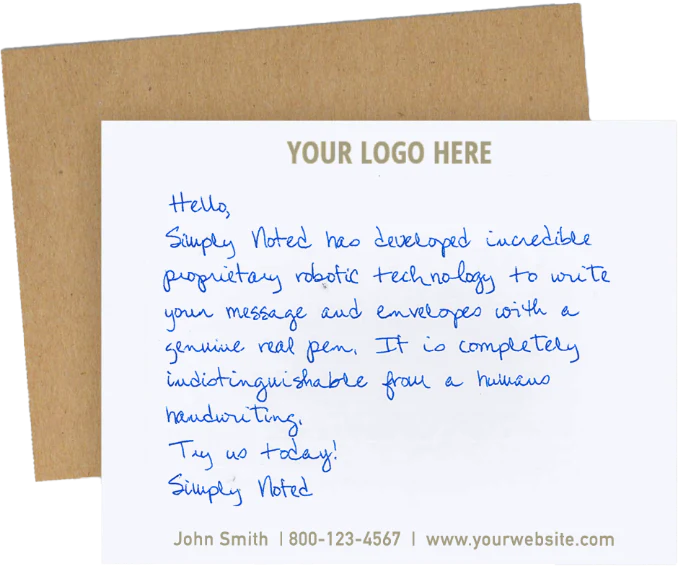
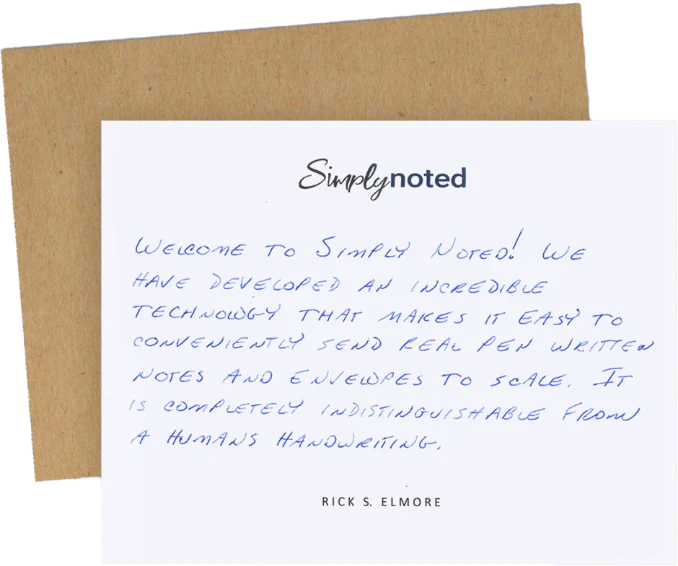
Handwritten mail does well on that test because the format already says effort. That's why so many businesses that care about this start with a handwritten card service. It makes the effort visible without your team spending the afternoon at a desk with a pen.
Why a handwritten note still gets read
Think about how you sort your own mail. Bills get opened. Printed flyers go straight to recycling. An envelope with your name written in real ink and a real stamp in the corner gets opened, because it looks like it came from someone you know.
The data says the same. The handwritten mail open rate we cite on our site is 99%, from USPS research, and we cite DMA data showing a 300% higher response than print. You can read more of the benchmarks in our guide to direct mail response rates. Most of that comes down to the envelope. We explain why the envelope decides whether it gets opened in a short video.
There's a second reason, and it's about the reader, not the mail. In 2018 researchers Amit Kumar and Nicholas Epley ran experiments where people wrote letters of gratitude. The writers kept underestimating how good the people receiving the letters would feel, and they overestimated how awkward it would be. The writers worried about finding the right words. The readers mostly cared that someone had bothered. That's worth remembering whenever you're tempted to skip a note because you aren't sure what to say.
Handwritten vs typed notes: what changes for the reader
A typed note isn't useless. It's just a different thing. Here's how the two usually compare from the customer's side:
| What the reader notices | Handwritten note | Typed or printed note |
| The envelope | Hand-addressed with a real stamp, looks personal | Printed label or meter mark, looks like marketing |
| The effort it signals | Someone took time for me | A system sent this |
| How long it's kept | Often set aside or pinned up | Usually read once, then thrown out |
| The ink | Real pen, you can feel the indentation | Flat toner, no texture |
| Best use | Thank-yous, follow-ups, milestones, apologies | Receipts, notices, long details |
The takeaway in the handwritten vs typed notes question isn't "never type anything." It's that the moments where you want someone to feel thanked or remembered are the moments where the pen wins.
The benefits of handwritten notes for a business
Here's what we see businesses get from handwritten notes when they use them well:
- They get opened. A hand-addressed envelope gets past the recycling bin, which most mail doesn't.
- They're remembered. A note that mentions the house they bought or the order they placed sticks with people longer than a discount code does.
- They make it easy to come back. A kind note gives a past customer a reason to call you again or send a friend your way.
- They set you apart. When your competitors only send email, one card in the mailbox stands out.
- They can be tracked. Our cards can carry a trackable QR code, so a note can do a job you can measure.
If you want to put numbers to your own list, our handwritten notes ROI calculator lets you plug in your figures.
Where the personal touch pays off most
You don't need to send a card for everything. Pick the moments where a customer is already paying attention:
- Right after the first sale. A thank-you after a first order or a signed contract sets the tone for the whole relationship.
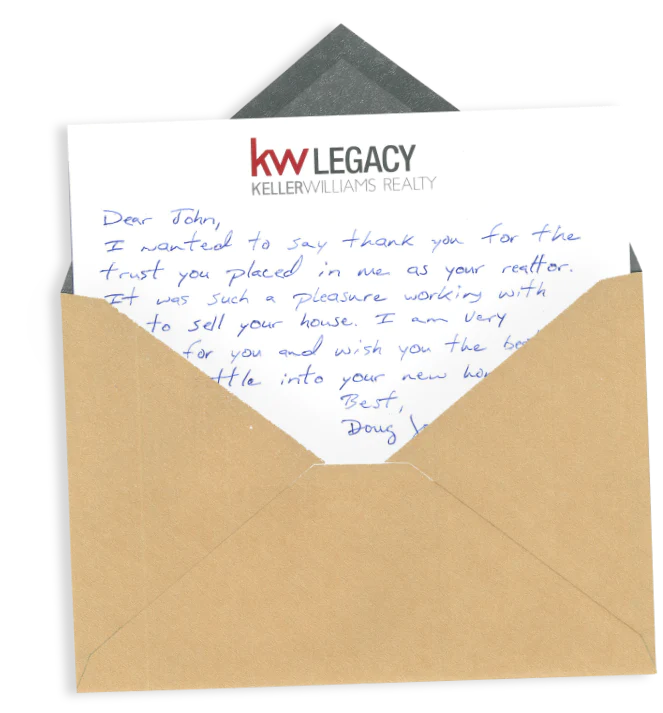
- After a big milestone. A closing, a policy renewal, a project wrapping up. Realtors use this to stay top of mind long after the keys change hands.
- On anniversaries and birthdays. A card on the date someone became a customer shows you remember them.
- When something went wrong. An honest, handwritten apology does more than another email from a no-reply address.
- To say thanks for a referral. The person who sent you business is the one most likely to do it again.
- To donors and volunteers. Nonprofits use handwritten notes to thank people who give their money or their time.
How to keep the personal touch as you grow
This is where most businesses get stuck. Writing ten notes a week by hand is doable. Writing four hundred isn't, and a pile of half-written cards on someone's desk helps nobody. We talk about this in a short video on how to stay personal with customers as your business grows.
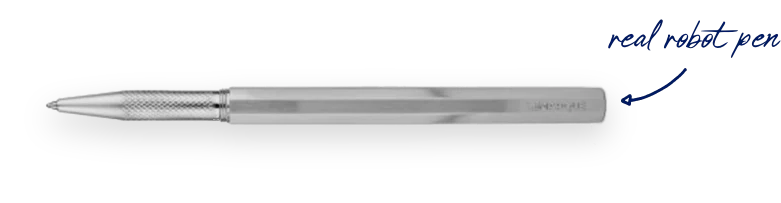
Here's how we handle it. You write the message, or start from a template and change it for each person. Our 220+ handwriting robots write every card with a real ballpoint pen, so there's natural ink variation and you can feel where the pen pressed. Then we address the envelope by hand, put a real stamp on it, and mail it. Writing and processing take 1 to 3 business days, then USPS First-Class delivery takes 3 to 5 business days.
Sending can start from wherever your customer data already lives. You can upload a CSV, or trigger cards from your CRM, Zapier, Shopify, webhooks or our REST API. That way the thank-you goes out after every closing or first order without anyone having to remember it. You can see every option on our integrations page, and our done-for-you handwritten notes for business page covers the rest.
On cost, handwritten note cards start at $0.99 per card plus postage on the Unlimited plan, and pay-as-you-go runs from $2.80 a card at 100 cards down to $0.90 at 50,000, before postage. There are no minimums and no contracts. You'll find the full breakdown on our pricing and plans page.
What to write so it feels personal
The writing matters more than the card stock. A few things we've learned from millions of words of other people's notes:
- Mention one specific thing. "Hope the new kitchen is everything you wanted" beats "Thanks for your business."
- Keep it short. Three or four sentences is plenty for a card.
- Don't sell in a thank-you. If you want to include an offer, make it a small, separate line at the end.
- Sign it with a real name, not your company name.
- Write it the way you'd say it. If it sounds like an ad when you read it out loud, rewrite it.
Watch: short videos from Simply Noted
We cover this subject in short videos too. These are the most relevant ones:
- How to Stay Personal With Customers as Your Business Grows (YouTube; also on TikTok, LinkedIn, Facebook, X)
- Direct Mail Tips: Why the Envelope Decides If It Gets Opened (YouTube; also on Instagram, LinkedIn, Facebook, X)
- Henry Winkler on Handwritten Notes (I Think He's Right) (YouTube; also on Instagram, TikTok, LinkedIn, Facebook, X)
- Kids' Drawing Machines Went Viral. We Run 220 Handwriting Robots (YouTube; also on Instagram, TikTok, LinkedIn, Facebook, X)
Frequently asked questions
What is personal touch marketing?
Personal touch marketing is any outreach a customer can tell was meant for them, not for a whole list. It includes personal calls, notes that mention something specific, and handwritten cards at key moments. The goal is to make someone feel remembered, which builds trust and brings repeat business.
Are handwritten notes better than typed notes?
For thanking someone, following up or marking a milestone, handwritten notes usually land better because they show effort. A hand-addressed envelope also gets opened more often than a printed one. Typed notes still make sense for receipts, notices and anything long or detailed.
What are the benefits of handwritten notes for a business?
They get opened, they're remembered, and they give customers a reason to come back or refer a friend. They also set you apart from competitors who only use email. With a trackable QR code on the card, you can measure what each note brings in.
Can handwritten notes still feel personal if a service writes them?
Yes, as long as the message is personal. Our handwriting robots write with a real ballpoint pen, so the card looks and feels handwritten. The personal part is what you say, so mention something specific to each person.
How much does it cost to send handwritten cards?
At Simply Noted, handwritten note cards start at $0.99 per card plus postage on the Unlimited plan. Pay-as-you-go pricing goes from $2.80 a card for 100 cards down to $0.90 at 50,000, before postage. Handwritten postcards start at $0.84 plus postage, with no minimums or contracts.
How long does a handwritten card take to arrive?
Writing and processing take 1 to 3 business days. After that, the card goes out by USPS First-Class Mail, which takes 3 to 5 business days. Plan your milestone and holiday cards with that window in mind.
Your next step
Pick one moment in your customer's journey where a note would mean something, like the first order, a closing or a referral, and start there. Once you see how people respond, adding more moments is easy. If you'd like us to handle the writing and mailing, our handwritten card service is built for exactly that, and you can compare plans on the pricing page. And if you want to feel the difference yourself, go to simplynoted.com and request a free sample today.