What to Do With Old Greeting Cards You Want to Keep
Simply Noted writes and mails real pen-and-ink cards for businesses. See handwritten notes for business →
Quick answer: Sort your old greeting cards into three piles: keep, reuse and let go. Store the keepers flat in an acid-free box somewhere cool and dry, and scan or photograph the rest if you want the words without the clutter. Cards you don't want can go to crafts, a card donation program (check first that it's still running) or the recycling bin, once the glitter and foil are off.
We write and mail handwritten cards every day, so we think about this question from the other side a lot. People ask us all the time what to do with a drawer full of old cards. And when they tell us which ones they couldn't throw out, it's almost never the one with the fanciest printing. It's the one somebody actually wrote in.
So this guide covers both sides. First, the practical part: how to sort, store, display and get rid of cards. Then a short look at what makes a card worth keeping. If you send cards for your business, that second part is the one to read closely.
Start by sorting: keep, reuse or let go
The hardest part is starting, so make it quick. Give yourself one pass through the pile and don't reread every card in full. Ask one question for each: would I be sad if this were gone?
- Keep: cards with a real handwritten message, cards from people who have passed, big milestones like weddings, births and graduations, and anything from a child.
- Reuse: cards with pretty fronts and a signature but no real message. These are good for crafts, gift tags or donation.
- Let go: cards that say "Happy Birthday" and a name, duplicates from the same person year after year, and anything you kept only out of guilt.
A good rule from people who've done this: keep the words, not the paper. If the message matters but the card itself doesn't, a photo of the inside does the job.
Greeting card storage that keeps them from fading
Once you know what you're keeping, store it so it lasts. Paper and ink don't like heat, damp or sunlight, so attics, basements and windowsills are the worst places for old cards.

- Use an acid-free box or archival photo box. Regular cardboard and some plastic bins can yellow paper over time.
- Store cards flat or upright, not crammed. Folding them tighter or stuffing a box until it bulges cracks the spines.
- Add dividers by person or by year. It makes the box something you'll actually open again, not just a pile with a lid.
- Take out anything that will damage the rest. Rubber bands, paper clips, sticky notes and loose glitter all do harm over the years.
- Write the year on the back in pencil if the card doesn't show a date. You'll be glad you did in twenty years.
If you have a lot from one person, say a grandparent who wrote every birthday, a small binder with archival sleeves works well too. You can flip through it like a book.
What to do with old cards you want to keep (beyond a box)
A box keeps them safe, but plenty of people want to actually see their cards. Here are the options most people choose, side by side.
| Option | Best for | Effort |
|---|---|---|
| Acid-free storage box | Large collections you want to keep whole | Low |
| Scan or photograph | Keeping the message without the paper | Low to medium |
| Scrapbook or binder | Cards from one person or one big event | Medium |
| Frame or shadow box | One or two cards that mean the most | Medium |
| Keepsake book printed from scans | Sharing with family | Medium to high |
1. Scan the inside, not just the front
Saving greeting cards digitally is the fastest way to shrink a pile. A phone scanning app is fine. Shoot the inside message first, since that's what you'll want later, then the front if you like it. Name the files with the person and the year so you can search them.
2. Frame the handwriting
A card from someone who's gone looks lovely in a simple frame, opened to the message. Some people frame just the signature or one line. It's the handwriting that makes it personal, and nothing else in the house looks like it.
3. Make a book for the family
If you've scanned a parent's or grandparent's cards, a printed photo book of their messages is a gift people treasure. It also settles the question of who gets the box.
What to do with old birthday cards and holiday cards you don't need
Birthday and holiday cards pile up fastest, and most of them are the ones with a printed verse and a signature. That's fine. Here's what you can do with them.
- Cut the fronts into gift tags. Punch a hole, add string, and next year's presents are covered.
- Turn fronts into postcards. Trim the front, write on the back, and check the size and postage at the post office before you mail it.
- Give them to a school, a craft group or a senior center. Teachers and activity directors often welcome them for projects.
- Donate the fronts. Some charities have run recycled card programs, where card fronts are trimmed and made into new cards to sell. These programs change and close over the years, so check the group's own site before you mail anything.
How to recycle greeting cards the right way
Plain paper cards can usually go in your curbside paper recycling. The catch is the decoration. Glitter is the big one: it's too small to be screened out at the recycling plant, so a glitter-covered card belongs in the trash, or you can cut the glittery part off first. Foil, ribbon, gems, batteries from musical cards and plastic windows should come off too.
Rules vary by city, so check your local recycling guide if you're not sure. And if you're sending cards yourself and care about this, plain card stock and ink are the easiest for the person on the other end to keep or recycle.
Why handwritten cards are the ones people keep
Here's something we've noticed from doing this work. When people go through a drawer of old cards, they toss the printed ones and keep the handwritten ones. A printed verse can be read once. Someone's actual handwriting feels like part of them, and that's hard to throw away.

That matters if you send cards to clients. A card that gets kept sits on a desk or a fridge for months, and your name sits with it. We compared two common client gifts in a short video on which one clients actually keep, and the note won for that reason. We made a quick video on real estate postcards vs handwritten notes for the same question, if you're in real estate.
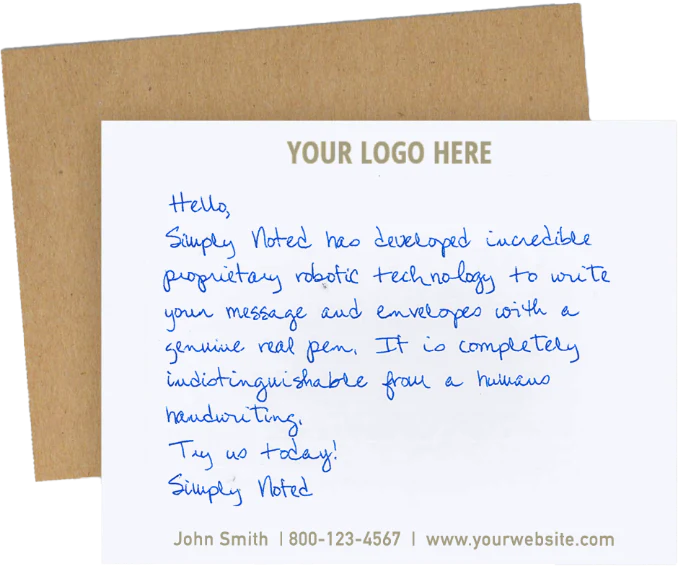
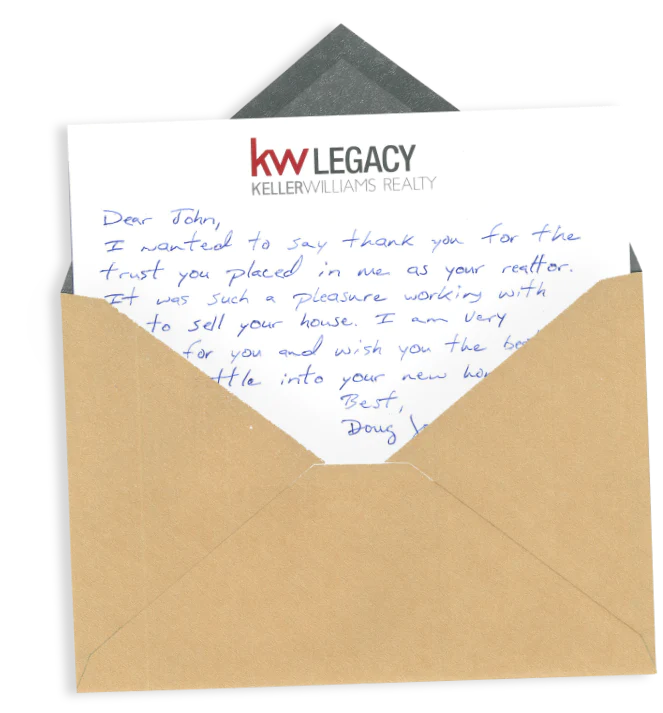
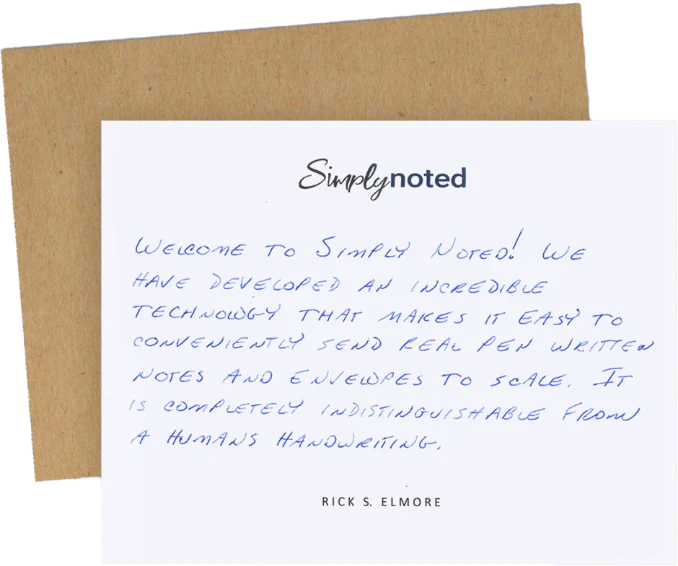
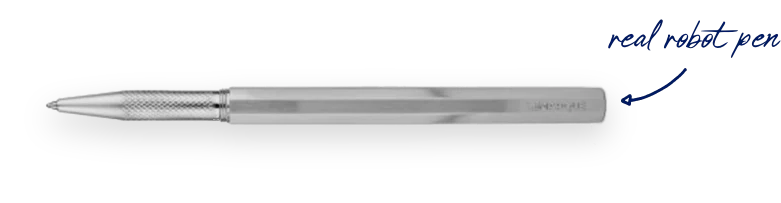
That's the idea behind our handwritten card service. Every card is written by one of our 220+ handwriting robots holding a real ballpoint pen, so you can feel the pen pressing into the paper and the ink varies the way real handwriting does. Then it goes in a hand-addressed envelope with a real stamp. It's the kind of card that ends up in somebody's keep pile.
The message matters as much as the pen. One specific line about the person beats a paragraph of general thanks. We walk through the one line to write on every thank-you card in under a minute.
Watch: short videos from Simply Noted
We cover this subject in short videos too. These are the most relevant ones:
- Gift Basket or Handwritten Note: Which One Do Clients Actually Keep? (YouTube; also on Instagram, TikTok, LinkedIn, Facebook, X)
- Real Estate Postcards vs Handwritten Notes: Which One Gets Kept (YouTube; also on Instagram, TikTok, LinkedIn, Facebook, X)
- The one line to write on every thank-you card (YouTube; also on Instagram, TikTok, LinkedIn, Facebook, X)
- Dental Practice Marketing: Mail New Patients a Welcome Card (YouTube; also on Instagram, TikTok, LinkedIn, Facebook, X)
Frequently asked questions
Should I throw away old greeting cards?
It's okay to throw away cards that don't mean anything to you. Keep the ones with a real message, the ones from people who've passed, and big milestones. If you're torn, take a photo of the inside and let the paper go.
Is there an organization that takes used greeting cards?
Some charities have run recycled card programs that turn old card fronts into new cards. Schools, craft groups and senior centers often take them for projects too. Programs come and go, so call or check the group's website before you send a box.
Can you recycle greeting cards?
Plain paper cards can usually go in paper recycling. Cards with glitter can't, because the glitter is too small to be screened out. Take off foil, ribbon, batteries and other extras first, and check your city's rules.
What's the best greeting card storage?
An acid-free or archival box kept somewhere cool, dry and dark. Avoid attics, basements and sunny spots. Store cards flat or upright with dividers by person or year, and take out rubber bands and paper clips.
What do I do with old birthday cards from someone who passed away?
Many people keep every one, or pick a few to frame open to the message. Scanning them lets you share copies with family so nobody has to choose who keeps the originals. A printed book of their messages makes a meaningful gift.
Is there a market for old used greeting cards?
Some vintage cards attract collectors and crafters, but most everyday used cards have little resale value. Their worth is personal. If you have very old cards, a local antique dealer can tell you whether any are worth more than a keepsake.
Send the card someone keeps
Sorting old cards shows you very quickly which ones people value: the ones written by hand, with something real to say. If you send cards to clients, donors or customers, that's the card to send.

You can see how it works for teams on our handwritten notes for business page, and check costs on our pricing and plans page. Note cards start at $0.99 plus postage, with no minimums and no contracts. To feel one yourself, go to our handwritten card service page and request a free sample today. It's mailed in 1 to 3 business days and you don't need a credit card.