Handwritten Envelope Addressing: Etiquette, Styles & Best Services

Handwritten Envelope Addressing — Etiquette, Styles, and the Best Services Compared
Handwritten envelope addressing still stands out because it feels thoughtful, warm, and intentionally personal. In a crowded world of digital messages, printed labels, and automated outreach, handwritten envelopes create a stronger first impression. They help invitations, greeting cards, and business mail feel more sincere from the moment recipients see the address.
That personal touch matters for many uses, from wedding invitations and holiday cards to handwritten direct mail campaigns for clients and prospects. A well-addressed envelope can reflect care, professionalism, and attention to detail. It can also support stronger response rates by making the mailing feel human instead of mass-produced or purely transactional.
This guide explains the basics of envelope etiquette, common handwritten envelope styles, and when businesses should use an envelope addressing service. It also compares popular options, including pricing and value, and shows how handwritten mail can support relationships, memorable outreach, and better campaign performance.
See Also: Handwritten Birthday Cards: 25 Messages & Best Services to Send Them
What Is Handwritten Envelope Addressing?
Handwritten envelope addressing means writing the recipient’s address by hand instead of printing it with labels or machine text. It is commonly used for invitations, handwritten cards, greeting cards, handwritten letters, and business mailing that needs a more personal presentation.
The main difference between print and hand addressing is how it feels to the recipient. Printed envelopes are fast and uniform, while handwritten envelopes appear more thoughtful, personal, and carefully prepared. That visual difference often changes how the mail is perceived.
Businesses and individuals use handwritten envelope addressing for wedding invitations, thank-you notes, holiday outreach, and direct mail campaigns. It helps create a warmer impression, adds personality to the mailing, and makes the envelope feel more memorable before the message is even opened.
Why Handwritten Envelope Addressing Still Works
Handwritten envelope addressing still works because people naturally pay more attention to something that feels personal. In a mailbox full of printed mail, hand addressing can help recipients feel valued, noticed, and more connected to the sender.
This is especially useful in handwritten direct mail campaigns, where first impressions affect whether the envelope gets opened. A personal touch can support higher open rates, boost responses, and make the message inside feel more relevant than standard promotional mail.
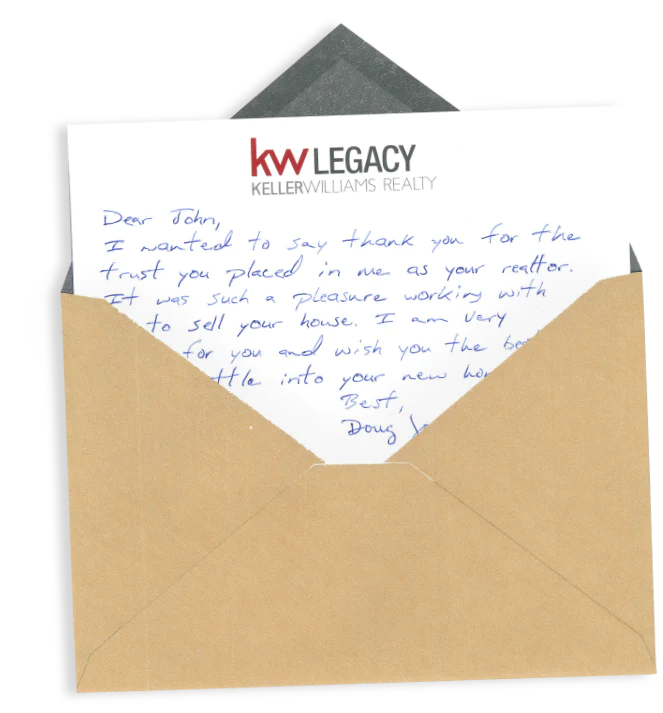
It also works well for real estate agents, service businesses, and brands that rely on relationships. Handwritten mail services are often cost-effective because they save time while preserving authenticity, helping businesses scale outreach without losing the human feel that makes mailing memorable.
Envelope Etiquette Basics Everyone Should Know
Good envelope etiquette starts with clear formatting. The return address should appear neatly in the upper left corner, while the recipient’s full address should be centered and easy to read. Clean handwriting and balanced spacing make the envelope look polished and professional.
Names should be written carefully using the correct title and preferred format. Depending on the situation, that may include first names, full names, family name, Mr and Mrs, or an individual title such as Mrs. Accuracy matters as much as style.
Simple design choices also affect results. Use quality stationery, readable handwriting, and real stamps when possible. Avoid clutter, keep lines straight, and make sure the address is legible. Even small details can strengthen the overall impression and support more effective handwritten mail.
Traditional Etiquette for Different Household Types

Traditional etiquette helps senders address envelopes correctly for different households and relationships. It is especially useful for wedding invitations, formal events, and important greeting cards where presentation matters. Knowing the right format avoids awkward mistakes and keeps the mailing respectful.
The correct format often depends on marital status, shared surname, title preference, and family structure. Some households follow traditional etiquette closely, while others prefer modern wording with full names. The safest approach is to combine clarity, accuracy, and respect.
This is why guest list review is so important before mailing. Checking guests names, preferred titles, and relationship details helps avoid errors. Whether you are mailing to married couples, single guests, or families, proper hand addressing makes the envelope feel thoughtful and well prepared.
Married Couples
For married couples with the same last name, traditional etiquette often uses Mr and Mrs followed by the husband’s full name. Modern formats may list both full names instead. When one spouse holds a higher rank or title, that person’s name is usually written first.
Unmarried Couples
For unmarried couples, list both full names on separate lines or in one line, depending on style and space. If you are equally close to both people, alphabetical order works well. If not, place the person you know better first.
Same Sex Couples
Same sex couples should be addressed with the same respect and care given to any couple. Use both full names and follow the couple’s preferred format when known. If unsure, modern etiquette favors listing names clearly without making assumptions about titles.
Single Guests and Families
For single guests, use the person’s full name and title if appropriate. For families, address the household by family name or list invited members clearly. Children may appear on the inner and outer envelope depending on the formality of the invitation.
Wedding Envelope Addressing Etiquette
Wedding envelope addressing needs extra care because the envelope sets the tone for the entire invitation suite. Guests often notice presentation before reading the invitation, so details such as names, spacing, titles, and overall handwriting style matter more in wedding mailing.
Formal wedding invitation envelopes may include an outer envelope and an inner envelope. The outer envelope carries the full address for delivery, while the inner and outer envelope combination can help clarify exactly who is invited, including children or additional family members.
Accuracy is especially important when managing a guest list. Engaged couples should review guests names, titles, and household details before mailing. Doing so helps avoid mistakes, supports smooth wedding invitations delivery, and ensures each guest feels properly acknowledged and respectfully invited.
See Also: How to Automate Handwritten Notes: Zapier, HubSpot, Salesforce & More
Popular Handwritten Envelope Styles
There are several handwritten envelope styles, and each creates a different impression. Some look formal and timeless, while others feel modern and minimal. The right style depends on the purpose of the mailing, the audience, and the tone you want to create.
Classic formal handwriting works well for wedding invitation envelopes, luxury invitations, and elegant stationery. Modern minimal styles suit contemporary brands and clean layouts. Casual personal styles feel warm and approachable, while calligraphy-inspired handwriting adds a premium visual effect.
Choosing the right style helps the envelope match the message inside. A wedding may need refinement, while business outreach may need readability and consistency. Whether for handwritten direct mail, greeting cards, or handwritten letters, style should support both clarity and presentation.
When Businesses Should Use an Envelope Addressing Service

Businesses should use an envelope addressing service when they want scale without losing the personal feel of handwritten mail. This is especially useful for holiday outreach, client gifts, handwritten cards, direct mail campaigns, and recurring mailing efforts that would take too much time internally.
Service businesses, real estate agents, and relationship-driven brands often benefit most. These businesses rely on trust, follow-up, and memorable communication, so handwritten envelopes can help messages stand out. They also help teams maintain consistency when sending large volumes to clients or prospects.
A handwritten envelope service makes sense when in-house mailing becomes slow, inconsistent, or difficult to manage. It can save time, reduce manual effort, and keep presentation strong across hundreds of envelopes, making it a practical and cost-effective option for growing campaigns.
Best Handwritten Envelope Service Compared
Choosing the best handwritten envelope service depends on budget, scale, campaign goals, and the level of personalization you need. Some businesses want simple, cost-effective outreach, while others may prefer premium options with added features, design flexibility, or a wider service range.
Pricing is an important factor, but value matters just as much. A service should help create authentic-looking handwritten envelopes while making mailing easier to manage. The best choice is usually the one that balances quality, speed, and campaign performance without unnecessary cost.
Below is a simple comparison of two well-known services. One may be a better fit for budget-conscious brands, while the other may suit users looking for additional options. The right decision depends on how many cards you send, how often you mail, and what experience you want recipients to have.
SimplyNoted
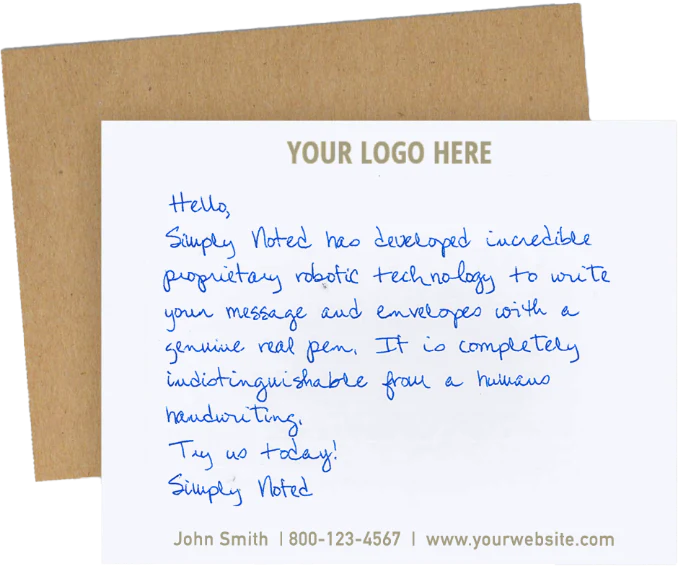
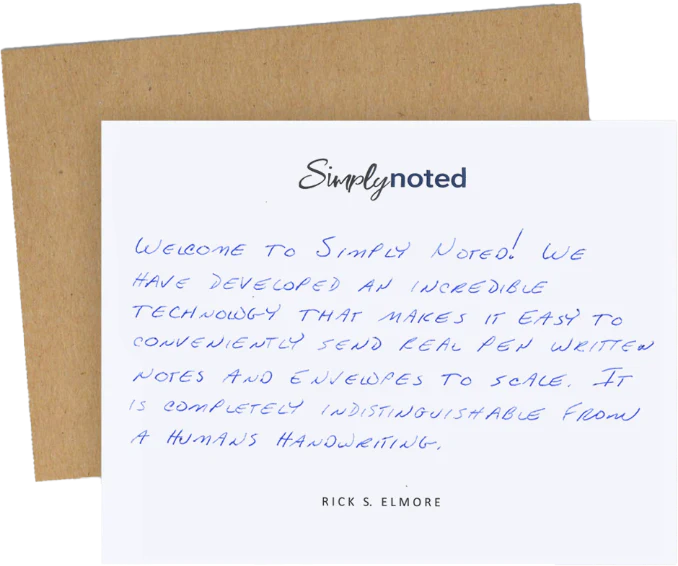
SimplyNoted is positioned as a cost-effective option at $485 for 500 cards, which works out to an included rate of about $0.97 per card. SimplyNoted enhances relationships through the unique power of authentic handwritten notes. It suits businesses that want scale, a personal feel, and stronger relationship building without paying premium pricing.
Which Service Is Best?
For budget-conscious brands, SimplyNoted offers better value based on the pricing provided. Businesses wanting to save while keeping quality may find it more practical. The best handwritten envelope service ultimately depends on campaign goals, mailing volume, personalization needs, and overall budget.
10 Professional Handwritten Christmas Card Messages for Clients and Employees
The best handwritten Christmas card messages feel warm, professional, and sincere. They should sound personal without becoming too casual. For clients and employees, the goal is to show appreciation, strengthen relationships, and leave a positive impression during the holiday season.
Handwritten cards work especially well because they feel more thoughtful than digital messages. A short, carefully written message can help clients feel valued and employees feel recognized. This simple gesture often supports stronger loyalty and more meaningful business connections over time.
Below are a few examples you can use, adapt, or personalize. Keep each message clear, genuine, and relevant to the relationship. When paired with handwritten envelope addressing, these holiday notes can make your greeting cards feel polished, memorable, and far more personal.
See Also: Best Congratulations Card Ideas for Every Occasion
1. Appreciation for Loyal Clients
Thank you for your trust and support throughout the year. We truly value the opportunity to work with you and appreciate your continued confidence in our team. Wishing you a joyful Christmas and a successful, happy New Year.
2. End-of-Year Thank You
As the year comes to a close, we want to thank you for being an important part of our journey. Your support means a great deal to us. Wishing you peace, happiness, and continued success this Christmas season.
3. Employee Recognition
Thank you for your dedication, hard work, and positive contribution this year. Your effort has made a real difference, and it is sincerely appreciated. Wishing you and your family a Merry Christmas and a well-deserved holiday break.
4. Holiday Goodwill Message
Warm holiday wishes to you and your loved ones this Christmas season. We are grateful for your support and partnership and look forward to staying connected in the year ahead. May your holidays be filled with peace and joy.
5. Long-Term Partnership Note
It has been a pleasure working with you, and we are thankful for the relationship we have built over time. Your trust is deeply appreciated. Wishing you a Merry Christmas and a bright, successful New Year ahead.
6. Real Estate Client Holiday Note
Thank you for allowing us to be part of such an important step in your journey this year. It was a pleasure assisting you. Wishing you comfort, happiness, and wonderful memories in your home this Christmas season.
7. Team Appreciation Message
Your commitment, professionalism, and support have helped make this year a success. Thank you for everything you have contributed. Wishing you a Merry Christmas, a restful holiday, and many exciting opportunities in the coming year.
8. Simple Professional Festive Wish
Wishing you a Merry Christmas and a Happy New Year. Thank you for your support, trust, and partnership throughout the year. We truly appreciate it and look forward to working together again in the future.
9. Premium Brand-Style Message
This season, we want to express our sincere appreciation for your continued trust and support. It has been a pleasure serving you. Wishing you a Christmas filled with joy, warmth, and meaningful moments with those you value most.
10. Warm Relationship-Building Message
At this special time of year, we want to say thank you for being part of our story. Your support matters to us. Wishing you a joyful Christmas and a New Year filled with happiness, success, and new opportunities.
Tips to Get Better Results From Handwritten Mail

Better results from handwritten mail usually come from attention to detail. Clear handwriting, accurate address details, quality envelopes, and well-chosen stationery all help create a stronger first impression. Small choices can make the mailing feel more professional, personal, and trustworthy.
It also helps to match the message with the recipient. Clients, employees, wedding guests, and prospects all respond best when the wording feels relevant and genuine. Using real stamps, neat formatting, and carefully written names can also support better response rates.
For campaigns, testing is useful. Compare response rates across different messages, styles, and mailing lists. Businesses using handwritten direct mail campaigns should track what helps boost responses. The most successful approach usually combines readability, consistency, and a strong personal touch.
Common Mistakes to Avoid
One of the most common mistakes is getting names wrong. Misspelled guests names, incorrect titles, or outdated assumptions about relationships can make even beautiful handwritten envelopes feel careless. Accuracy should always come before style, especially for invitations and formal mailing.
Poor formatting also causes problems. Crowded lines, uneven spacing, hard-to-read handwriting, or unclear address placement can reduce the impact of handwritten envelope addressing. Even the best message can lose value if the envelope looks rushed or confusing to recipients.
Another mistake is relying too much on traditional etiquette without considering modern preferences. Some married couples, same sex couples, or families may prefer different wording. The best practice is to review details carefully, respect preferences when known, and prioritize clarity, courtesy, and presentation.
Final Thoughts
Handwritten envelope addressing continues to matter because it adds warmth, care, and a personal feel that printed mail often lacks. Whether used for wedding invitations, greeting cards, handwritten letters, or business outreach, it helps create a stronger first impression from the start.
It also works across many goals. Businesses use it to strengthen client relationships, improve direct mail campaigns, and stand out in crowded mailboxes. Individuals use it to add elegance to invitations and create a more thoughtful experience for guests and recipients.
When paired with proper envelope etiquette, the right handwritten envelope styles, and a reliable service, handwritten mail becomes more than simple mailing. It becomes a more memorable form of communication that helps people feel noticed, respected, and genuinely valued.
Need to scale handwritten outreach without losing the personal touch? Choose a service that helps you create authentic handwritten mail that feels thoughtful, professional, and memorable.
FAQs
How do you handle handwritten envelope addressing for couples with different last names?
For couples with different last names, write both full names clearly. You can use one line or two lines based on space. If you cannot decide who comes first, use alphabetical order. For example, Jane Smith and John Carter is clear, respectful, and works well for formal envelopes.
Should I request title preferences before addressing envelopes?
Yes, it is wise to request title preferences when possible. This helps avoid mistakes about gender, marital status, or a woman’s preferred title. A simple check can save time, improve accuracy, and make handwritten envelope addressing feel more thoughtful, personal, and professional.
What is the best way to contact guests if I am unsure how to address them?
If you are unsure, contact the guest before mailing. This helps confirm full names, title preferences, and the correct format. It is especially useful when someone has a different last name or specific preference. A quick check is better than sending an envelope with mistakes.
How do I decide between traditional etiquette and modern wording?
Decide based on the occasion and the person receiving the mail. Traditional etiquette suits formal wedding invitations, while modern wording works well for business or casual cards. If you know the recipient’s preference, follow that. Clarity and respect should always come first.
Should I use Mrs, Ms, or a woman’s full name on the envelope?
Use the title the recipient prefers whenever possible. If you are unsure, Ms is often the safest choice because it does not assume marital status. In formal cases, some may prefer Mrs. Using a woman’s full name is also a respectful and professional option when needed.