What Is an Autopen, and How Is It Different From Real Handwriting?
Simply Noted writes and mails real pen-and-ink cards for businesses. See handwritten notes for business →
Quick answer: An autopen is a machine that holds a real pen and signs a person's name by tracing a saved copy of their signature. Presidents, members of Congress, authors and executives have used it for decades to sign more letters than they have time for. It puts down the same signature the same way every time, so it can sign a letter, but it can't write one.
We get asked about autopens a lot, and the questions pick up every time the word is in the news. People want to know if a signature from a machine counts, how you'd spot one, and honestly, whether a handwritten card from a business is just an autopen with better marketing.
It's a fair question. We run more than 220 handwriting robots in Phoenix that write cards, notes and envelopes with real ballpoint pens, so we think about the line between a machine holding a pen and real handwriting every day. Here's what an autopen actually is, how it works, and where it stops being useful. If you want to see how our side works first, our page on handwriting robots that write with a real pen walks through it.
What is an autopen?
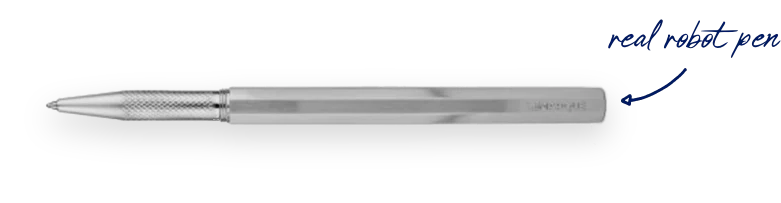
An autopen is a signing machine. A pen is clamped into a mechanical arm, a sheet of paper goes underneath, and the arm traces a stored copy of someone's signature. The result is real ink on real paper, which is why it looks a lot more convincing than a rubber stamp or a printed signature.
The point of it is volume. If you're a senator answering thousands of constituent letters, or an author signing a stack of book plates, you can't sign each one yourself. An aide writes or prints the letter, the autopen signs it, and the letter goes out looking hand-signed.
The thing to keep in mind is what an autopen copies. It copies a signature, one fixed set of strokes. The letter above the signature is usually typed or printed.
How does an autopen work?
The basic idea hasn't changed much over the years. Here's the process:
- The signature is recorded once. Older machines used a physical template, a kind of signature mold the arm followed. Newer ones store the signature digitally.
- A pen goes into the arm. It's a regular pen, so the ink is real.
- Paper goes under the pen. The operator lines up the sheet where the signature belongs.
- The machine traces the template. The arm moves through the same strokes, in the same order, at the same speed.
- Repeat. Swap the paper and run it again.
That's why every autopen signature from the same template is basically identical. A person never signs their name exactly the same way twice. A machine following a template does.
A short history of the autopen machine
The autopen goes back further than most people think. In 1803 John Isaac Hawkins patented a device called a polygraph (nothing to do with the lie detector). It linked two pens so that a second pen copied every move of the first. Thomas Jefferson started using one in 1804 to keep copies of his letters, and he said he couldn't do without it.
The machine we'd recognize today came from Robert De Shazo Jr., a machinist at the Naval Torpedo Factory in Alexandria, Virginia. He improved on a 1930s signing machine and built what's described as the first commercially successful autopen; the Navy ordered one in 1942. He later bought the company behind the earlier machine and renamed it the International Autopen Company.
Presidents have leaned on it for a long time. In 2005 the Justice Department's Office of Legal Counsel wrote that a president can't hand off the decision to sign a bill, but once he's decided, he can direct someone to put his signature on it, for example with an autopen. The White House relied on that opinion in 2013 when a bill renewal was signed by autopen while the president was traveling. More recently a House Oversight Committee report on autopen use put the word back in the headlines, and searches for it jumped.
Is an autopen signature a real signature?
It depends on what you mean by real. The ink is real. Whether it counts is a separate question.
For bills, the Justice Department's view is that the decision to sign is what matters, not whose hand moved the pen. For contracts, legal forms and anything else with real stakes, the rules depend on the document and the setting, so ask a lawyer before you rely on one.
For autograph collectors the answer is simpler. A machine-signed item isn't treated like one the person signed by hand, and dealers spend a lot of effort telling the two apart.
How to spot an autopen signature
- Exact matches. Lay two signatures from the same template on top of each other and they line up almost perfectly. People don't sign that consistently.
- Flat pressure. Hand-signed names get heavier and lighter as the pen moves. Autopen lines tend to look even and a little lifeless.
- Tiny wobble. The motor arm can pass small vibrations into the line, and you sometimes see a slight shake or ink pooling where the pen paused.
- Too perfect. Real signatures have rushed, messy, hard-to-read parts. Machine copies often look neater than the person ever signs.
Even experts say it takes a trained eye. The most reliable check is comparing against signatures you know are genuine.
Autopen vs. handwriting robot vs. handwriting font
Here's where people get mixed up. An autopen, a handwriting robot and a printed handwriting font all get called "fake handwriting" sometimes, but they do very different things.
| Method | What it writes | Ink | Personal to each reader? |
|---|---|---|---|
| Autopen | One stored signature | Real pen | No, the same signature every time |
| Handwriting robot | The whole message, the signature and the envelope | Real ballpoint pen; you can feel the indentation | Yes, every card can say something different |
| Printed handwriting font | Any text | Printed and flat on the page | Yes, but it reads as printed up close |
| You, by hand | Anything | Real pen | Yes, until your hand gives out |
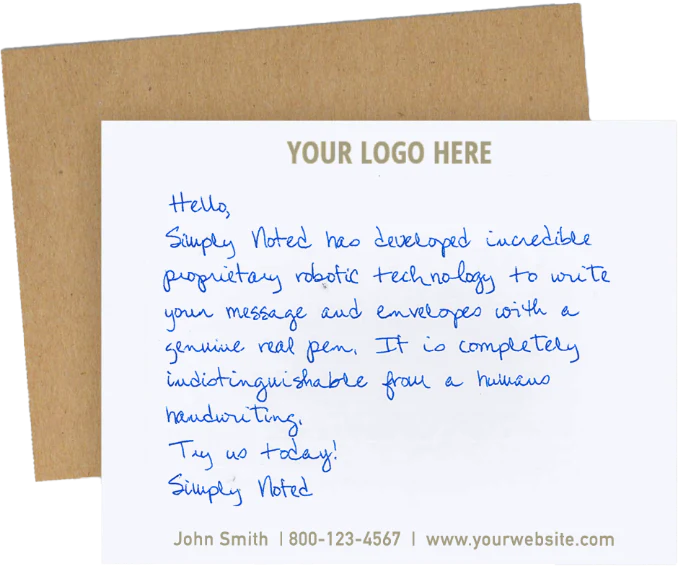
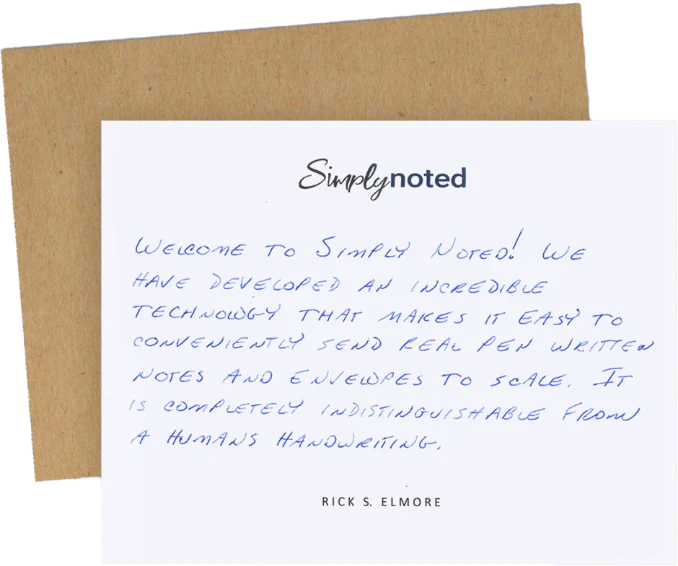
So here's the honest version. Our handwriting robots are machines too. What's different is what they write. An autopen puts a signature at the bottom of a letter someone typed. Our handwriting robots write the whole card in pen, message and name and envelope, with natural ink variation, and each card can be written for the person getting it. We show the setup in a short video about our 220 handwriting robots.
Why this matters if you send mail for your business
People argue about autopens because they care whether a real person was behind the signature. Your customers feel the same way about your mail. A typed form letter with a machine signature at the bottom still reads like a form letter. That's what makes something feel personal: their name on the envelope, a message about them, written out in pen.
That's also why handwritten mail works. The site cites USPS research showing a 99% open rate for handwritten mail, and DMA data showing 300% higher response than print. Those numbers come from the card being written out, not from a signature at the bottom.
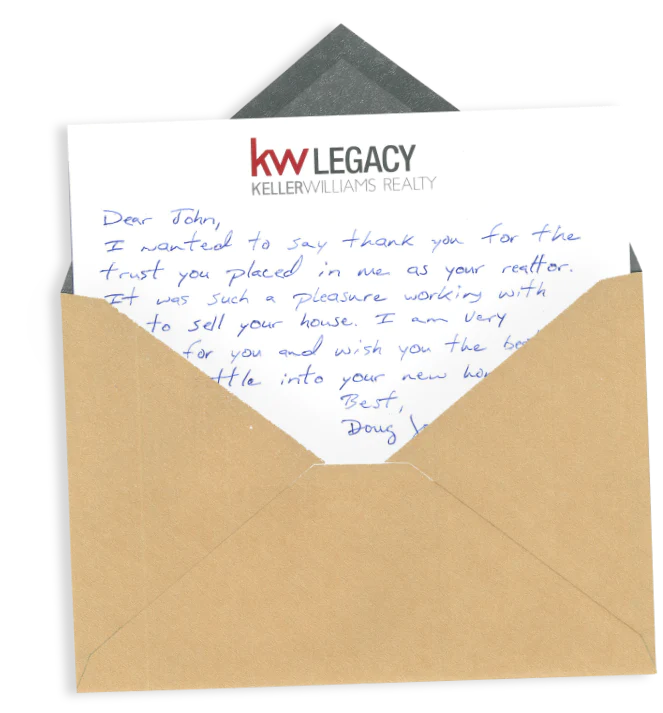
For a realtor thanking a client after closing, or an insurance agent following up on a quote, the practical setup looks like this. You write the message once with a spot for their name and a detail or two. You send the list by CSV, Zapier, Shopify, your CRM or our handwritten mail API. Then we write each card, hand-address the envelope, put a real stamp on it and mail it. You can see the formats on our handwritten card service page, and the envelope matters more than people think, which we cover in a quick video on why the envelope decides if it gets opened.
Watch: short videos from Simply Noted
We cover this subject in short videos too. These are the most relevant ones:
- Kids' Drawing Machines Went Viral. We Run 220 Handwriting Robots (YouTube; also on Instagram, TikTok, LinkedIn, Facebook, X)
- Direct Mail Tips: Why the Envelope Decides If It Gets Opened (YouTube; also on Instagram, LinkedIn, Facebook, X)
- Holiday Cards for Clients: Why You Should Mail Them Before Thanksgiving (YouTube; also on Instagram, LinkedIn, Facebook, X)
- Holiday Cards for Clients: Get Them Out Early (Santa Suit Edition) (YouTube; also on Instagram, LinkedIn, Facebook, X)
Frequently asked questions
What is an autopen used for?
It signs large numbers of documents with one person's signature: constituent letters, photos for fans, certificates, routine mail. Presidents have also used it to sign bills, based on a 2005 Justice Department opinion. The letter itself is usually typed or printed, and only the signature comes from the machine.
How does an autopen work?
A pen is clamped into a mechanical arm that traces a stored copy of a signature. Older machines followed a physical template and newer ones store it digitally. Every signature from the same template comes out nearly identical.
Is an autopen signature legally binding?
For bills, the Justice Department has said a president may have his signature affixed by autopen after deciding to sign. For other documents it depends on the type of document and the rules that apply. Check with a lawyer for anything important.
Are autopen signatures worth anything?
To collectors, not much compared with a real hand signature. Dealers check for exact matches against known autopen patterns, flat pressure and small wobbles in the line. Spotting one can take a trained eye.
What's the difference between an autopen and a handwriting robot?
An autopen repeats one stored signature. A handwriting robot writes a whole message in pen, plus the signature and the envelope, and each card can be different. Both use a real pen, but only one writes a card that's personal to the person reading it.
How much does a handwritten card cost?
Handwritten note cards start at $0.99 per card plus postage on the Unlimited plan. Pay-as-you-go runs from $2.80 a card for 100 cards down to $0.90 at 50,000, before postage, with no minimums or contracts. The details are on our pricing and plans page.
See the difference for yourself
An autopen is fine for putting a signature on a typed letter. If you want people to feel that you actually wrote to them, the whole card needs to be written in pen. That's the work our handwriting robots do every day, and writing plus processing takes 1 to 3 business days before USPS First-Class delivery.
The easiest way to judge is to hold one. Go to simplynoted.com and request a free sample today. It's mailed in 1 to 3 business days, and you don't need a credit card.