Closing Gifts for Buyers That Clients Actually Remember
Simply Noted writes and mails real pen-and-ink cards for businesses. See handwritten notes for business →
Quick answer: The closing gifts for buyers that get remembered are about the buyer and the house, not about the agent. Pick something they'll use in the new place, add a handwritten note that names one real detail from the search, and have it arrive in the first week or two after move-in instead of at the closing table. Keep your logo off it.
We write and mail handwritten real estate letters and cards for agents, so we see the note side of closing gifts every day. And the pattern is hard to miss. The agents who get remembered aren't the ones who spend the most. They're the ones who send something that could only have gone to that one buyer.
So this isn't another list of 25 products. Most of what ranks for this search is a shop or a long gift list, and one of the top results is a forum thread of agents asking each other what buyers actually like. That's the right question. Here's how we'd answer it, including the tax rule we think every agent should know before setting a budget.
What makes a closing gift stick: three tests
Before you look at a single product, run the idea through these three tests. If it fails one, keep looking.
- It's about them. A gift with their name, their new address or a drawing of their house on it is about the buyer. A gift with your logo on it is an ad. They can tell the difference, and only one of those goes on the shelf.
- It lives in the house. The best closing gifts get used or seen in the home you helped them buy. Every time they pick it up, the house and the person who helped them get it come to mind together.
- It shows up when they can notice it. On closing day your buyers are signing papers, juggling keys and thinking about movers. A gift handed over in that hour competes with everything else going on. One that lands a week later, in a quiet moment, has the room to itself.
Notice that price isn't on the list. A modest gift that passes all three will be remembered longer than an expensive one that fails the first.
Closing gifts for buyers, compared
Here's how the common choices hold up against those tests. None of these is wrong. Some just need more help from the note that goes with them.
| Gift | Used in the house | Still around in a year | Personal to this buyer | Watch out for |
|---|---|---|---|---|
| Custom portrait or illustration of the home | Yes, on a wall | Yes | Very | Needs lead time, so order before closing |
| Engraved board with the family name | Yes, in the kitchen | Yes | Yes | Check the spelling and how they write the name |
| Gift card to a restaurant near the new address | No, but it gets them into the neighborhood | No | Only if you pick the place for a reason | A generic chain card says nothing |
| Food or wine basket | Briefly | No | Rarely | Allergies, and buyers who don't drink |
| Practical move-in item (tool kit, doormat, plant) | Yes | Often | Somewhat | Easy to duplicate what they already own |
| Anything with your logo on it | Maybe | Maybe, in a drawer | No | Reads as marketing, not thanks |
If you send a consumable, that's fine. Just know the gift itself will be gone in a week, so the note has to carry the memory.
The note is the part they keep
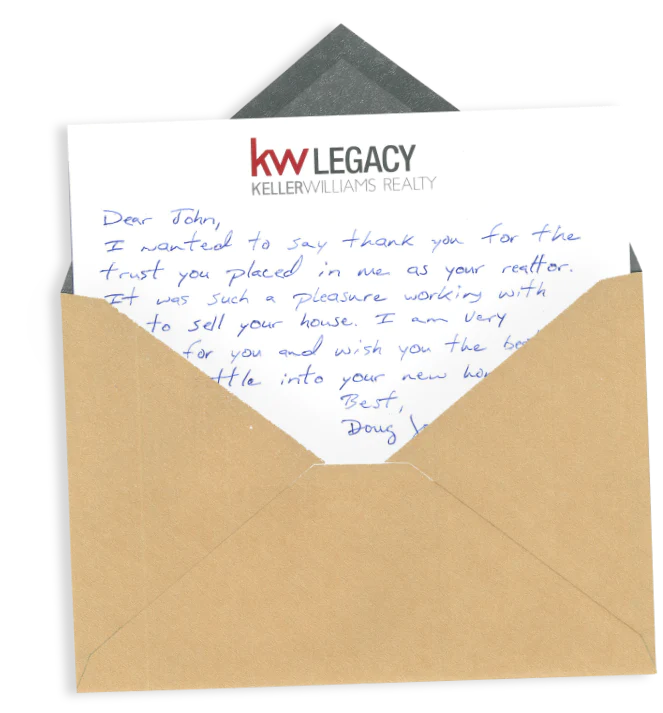
Here's the thing about realtor closing gifts: the basket gets eaten and the gift card gets spent, but a good handwritten note ends up on the fridge or in a drawer with the closing papers. It's also the only part of the gift that can prove you were paying attention.

A note that works has one specific detail from the search, one line about the gift and why you chose it, and nothing that sounds like a pitch. No request for referrals. No business card falling out. We walk through the levels of a thank-you note, from plain to personal, in a short video.
Three you can adapt today:
- First-time buyers: Jordan and Sam, eleven showings and one very long Saturday, and you still held out for the place with the big kitchen window. I'm so glad you did. The board is for the first dinner you cook there. Welcome home.
- A family that moved for schools: Maria, I keep thinking about Leo measuring the backyard for a soccer goal before you'd even made the offer. I hope it's up by spring. The gift card is for the taco place two blocks over. Go on a weeknight.
- A relocation buyer: David, buying a house from three states away takes some nerve, and you never once lost your patience with the video tours. The print is your new front porch. I hope it starts to feel like yours fast.
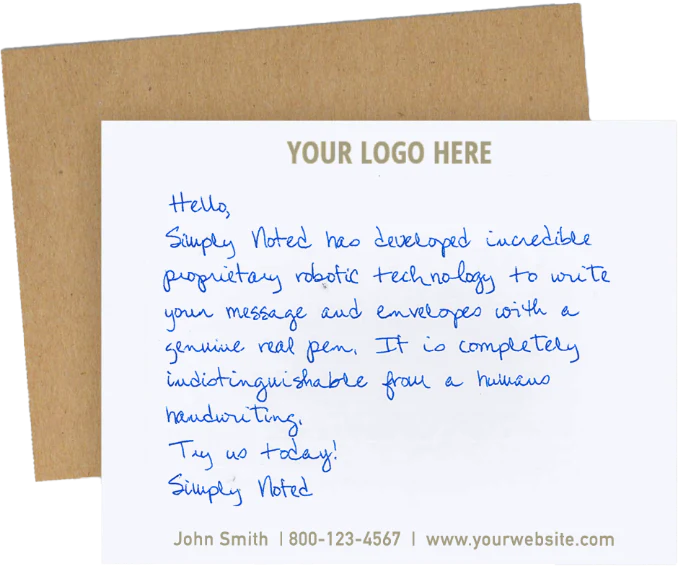
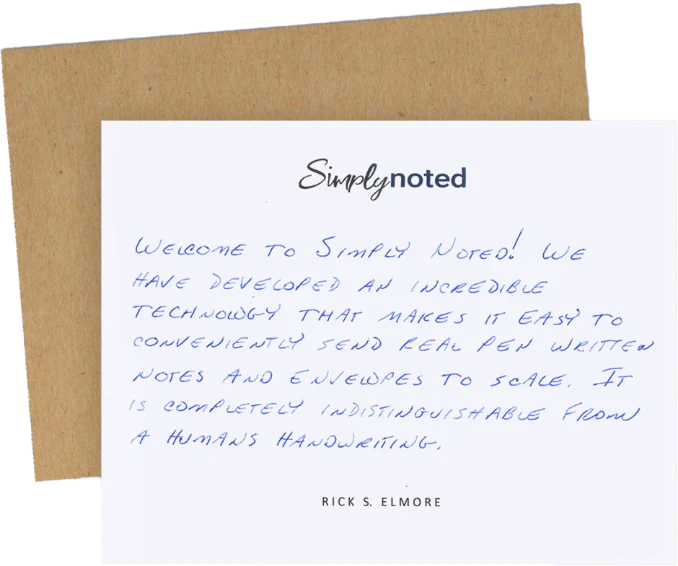
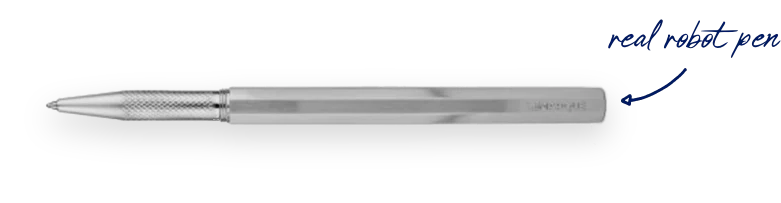
If your own handwriting or your schedule is the problem, that's the job our handwritten card service does. You type the note, and one of our handwriting robots writes it with a real ballpoint pen. You can watch one write a letter in this short video.
When to send it
We'd skip the closing table and aim for the first week or two in the house. That's when the boxes are half unpacked, the adrenaline has worn off, and a thoughtful package at the door gets noticed.
The mail timing works in your favor here. When you send a card through us, writing and processing take 1 to 3 business days, then USPS First-Class delivery takes 3 to 5 business days. So a card ordered on closing day reaches the new address roughly 4 to 8 business days later, right in that window. Send it to the new house, not the old one.
If the gift ships separately, let the card go on its own. A hand-addressed envelope with a real stamp, sitting in a mailbox full of change-of-address junk, gets opened first. We explain why the envelope does so much of the work in a short video.
Closing gifts for sellers are a different job
Buyers are arriving. Sellers are leaving, and often leaving a house they raised kids in. So closing gifts for sellers should look back as much as forward.
- A portrait of the home they just sold usually means more to a seller than it does to a buyer.
- Skip move-in items unless you know where they're going and what they need.
- In the note, name the work they did: the weekends of showings, the repairs, keeping the place spotless with a dog in the house.
If you represented both sides of a move, send two separate notes. One card that covers both the sale and the purchase reads like a receipt.
Are closing gifts tax deductible? The $25 rule
This is the part most gift lists leave out, and it should shape how you think about budget. We checked it against IRS Publication 463 (2025 edition) and the IRS's own business-gift FAQ on November 24, 2026.
- You can deduct no more than $25 for business gifts to any one person per tax year, whether you give them directly or indirectly.
- Incidental costs such as engraving, packaging and shipping don't count toward the $25, as long as they don't add substantial value to the gift.
- Items that cost $4 or less, have your name clearly and permanently imprinted on them, and are widely handed out aren't treated as gifts under this limit.
- You and your spouse are treated as one taxpayer for the limit, even if you each give a gift.
- Something that could count as either a gift or entertainment is generally treated as entertainment, which isn't deductible.
- Keep a record of what you gave, what it cost, the date and the business reason.
In plain terms: you can spend whatever you like on a closing gift, but only $25 per person comes off your taxes. So don't pick a gift for the write-off. We're not tax advisors, and your CPA should make the call on your return.
Make it a habit, not a one-off
One gift at closing is nice. Being the agent who stays in touch is what leads to the next conversation. A simple schedule we see agents use:
- Closing week: the gift and the handwritten note.
- About 30 days in: a short card asking how the house is treating them, with your cell number.
- The home anniversary: a card on the date they closed, every year.
You don't have to remember any of this. If the closing date lives in your CRM, it can trigger each card for you through our integrations or Zapier, or you can upload a spreadsheet. There are no minimums and no contracts, and pay-as-you-go cards start at $2.80 each for 100 cards before postage. The full breakdown is on our pricing page. For more on working handwritten mail into the rest of your business, see our guide to handwritten notes for real estate agents.
Watch: short videos from Simply Noted
We cover this subject in short videos too. These are the most relevant ones:
- What to Write in a Thank-You Card: The 4 Levels, From Plain to Personal (YouTube; also on Instagram, TikTok, LinkedIn, Facebook, X)
- What to Write in a Thank-You Card After a Customer Buys (YouTube; also on Instagram, TikTok, LinkedIn, Facebook, X)
- Direct Mail Tips: Why the Envelope Decides If It Gets Opened (YouTube; also on Instagram, LinkedIn, Facebook, X)
- Yes, that's a real pen: a handwriting robot writing a letter (YouTube; also on Instagram, TikTok, LinkedIn, Facebook, X)
Frequently asked questions
Do realtors give closing gifts to buyers?
Many do, but it isn't required and there's no standard gift. It's a thank-you from the agent, paid for by the agent. Buyers don't expect a particular item, which is why a personal one stands out.
How much should realtors spend on closing gifts?
There's no rule. Pick an amount you can afford on every single closing, because being consistent matters more than one big gesture. Keep in mind that the IRS only lets you deduct $25 per person per year, whatever you actually spend.
Are closing gifts tax deductible?
Partly. Under IRS Publication 463, business gifts are deductible up to $25 per recipient per tax year, and incidental costs like engraving or shipping don't count toward that if they don't add substantial value. Ask your CPA how it applies to you.
When should you give a closing gift?
We'd send it in the first week or two after move-in. Closing day is crowded, and a gift that arrives once they've settled a little gets real attention. Mail it to the new address.
What are some good closing gifts for a seller?
Something that honors the home they're leaving, like a portrait of the house, tends to land well. Pair it with a note that names the work they put into the sale. Avoid move-in items unless you know their next place.
What do you write in a closing gift card?
One real detail from the search, one line about why you picked the gift, and a warm welcome home. Leave out the referral request and the business card. Three or four sentences in your own voice is plenty.
Your next step
Pick your next closing and run the gift through the three tests: is it about them, will it live in the house, and will it arrive when they can notice it? Then write the note first, before you buy anything. If the note is easy to write, you've picked the right gift.

And if you'd like the note handwritten and mailed for you, take a look at our handwritten real estate letters and cards, or see the pen work for yourself. Go to simplynoted.com and request a free sample today.