Why Handwritten Notes Still Matter in a Digital World (2026 Guide)

Why Handwritten Notes Still Matter in a Digital World — And How Businesses Are Scaling Them
Digital communication now shapes almost every part of modern life. Business messages arrive through email, chat, CRM workflows, and mobile apps. Personal communication also happens on a screen, often through quick replies, voice notes, and social platforms. In this environment, it is fair to ask why handwritten notes important when technology makes communication faster, cheaper, and easier to scale.
The answer is that handwritten notes still create a different kind of attention, memory, and emotional response. A note written by hand feels deliberate. It slows the process down, makes the message more visible, and often leaves a stronger impression than a digital message that disappears in a crowded inbox. That difference matters in both learning and business communication.
This guide explains both sides of the topic. First, it looks at the cognitive side, including what research says about handwriting, memory, and learning. Then it covers the business side, including the benefits of handwritten notes, the power of handwritten communication, and how companies now scale this approach with services like SimplyNoted.
SEE ALSO: 5 Sample Sympathy Thank You Notes
Why Handwritten Notes Are Still Important Today
The value of handwriting has not disappeared just because digital tools became dominant. In fact, the growth of digital communication may be one reason handwriting feels more meaningful today. When most messages arrive through a keyboard, a handwritten note stands out immediately. It feels intentional, physical, and harder to overlook.
That contrast explains part of why handwriting is important in a digital-first environment. Typed notes, emails, and chat messages are useful for speed, but they often feel temporary. A handwritten message has more presence. It lives on paper, carries visible effort, and often feels more memorable because someone had to take the time to write it.
The physical act of writing also creates a different experience for the brain and memory. Writing by hand involves movement, attention, and form in a way typing often does not. This is one reason many people still believe in the power of handwritten communication. It feels slower, but it can also be more meaningful and more effective.
That is why the benefits of handwritten notes go beyond nostalgia. They help people focus, communicate more intentionally, and create stronger connections. In both education and business, that remains valuable.
What Research Says About Handwriting, Memory, and Learning
A growing body of research suggests that writing by hand can support memory and deeper processing of information. This does not mean typing is ineffective, but it does show a meaningful difference between handwritten notes and typed notes in some situations. Studies in education, psychology, and neuroscience have examined how note taking by hand affects learning.
Part of the explanation involves the motor system, visual system, and brain activity working together during handwriting. When people form letters with a pen, they engage movement, attention, and recognition at the same time. That process may help the brain connect words, form, and meaning more actively than typing alone.
Across primary school, university students, and even learners with disabilities, the overall evidence suggests handwriting can support learning, memory, and cognitive development. While results vary by task and age, handwriting appears to be more than an old habit. It remains a useful part of how people learn and process information.
Why Writing by Hand Feels More Meaningful

Handwriting feels meaningful because it is personal, physical, and deliberate. A handwritten note does not appear instantly like a text or email. Someone has to sit down, choose words, move the pen, and create the message line by line. That process gives communication more weight, which is one reason research discussions linked to Van der Meer and work from a Norwegian University have drawn attention to handwriting.
This is also why handwritten letters and handwritten notes often carry stronger emotional value. They feel tied to a real person rather than a device or automated system. Even small details like pen pressure, spacing, and writing style make the message feel more human, thoughtful, and sincere.
There is also a clear difference between receiving a handwritten note and a typed message on a screen. A digital message is fast and convenient, but it can feel disposable. A handwritten note feels lasting, memorable, and easier to keep, which helps explain why handwritten letters are better in relationship-based settings.
SEE ALSO: How to Write Professional Thank You Messages for Different Audiences
Benefits of Handwritten Notes in Business
The value of handwritten notes in business comes from how they help a company stand out. Most business communication now arrives through automated email, CRM triggers, digital ads, and chat tools. Those channels matter, but they are crowded. A handwritten note feels different because it breaks that pattern.
This can be useful in sales, customer retention, donor relations, recruiting, and employee appreciation. A short handwritten note after a sale, an event, a donation, or a work milestone can create stronger connections than a standard digital follow-up. It shows effort, attention, and respect.
Handwritten communication also helps businesses build trust and brand recall. People remember thoughtful moments more than generic ones. A note written on paper can become a physical reminder of the business and the relationship, which gives it lasting value beyond the moment it is received.
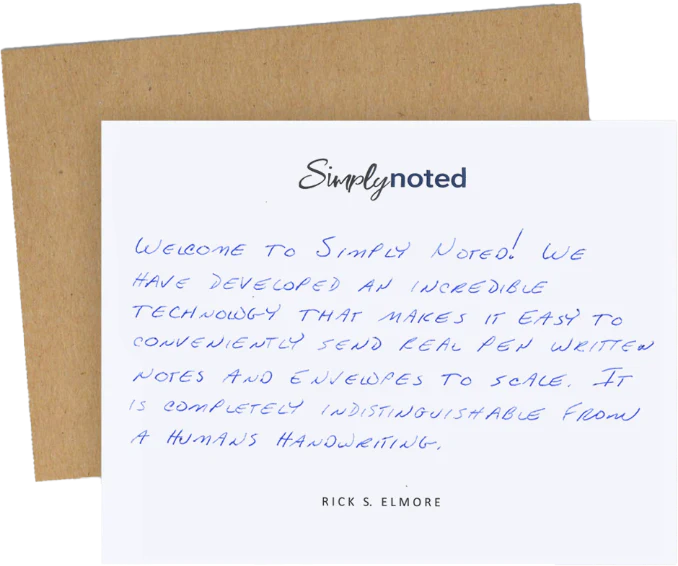
That is why the business case for handwritten outreach is growing. Companies want communication that feels personal, but they also need scale. Services like SimplyNoted help bridge that gap by allowing businesses to keep the warmth of handwritten notes while managing them more efficiently across campaigns and touchpoints.
Why Handwritten Notes Work Better Than Many Digital Messages
Digital communication is fast, but speed does not always create impact. Email overload, message fatigue, and constant notifications make it harder for people to notice or remember what they receive. A handwritten note avoids much of that problem because it arrives in a different format and demands a different kind of attention.
Handwritten communication also feels less automated. Even when businesses use systems to scale it, the message itself still feels more engaging because it resembles direct human effort rather than software output. That makes the experience warmer and more memorable.
Paper also changes how attention works. A handwritten note is tangible. It can be held, reread, and placed somewhere visible. That physical presence improves focus in a way a passing digital notification often does not. In many cases, the difference is simple: digital messages win on speed, but handwritten notes often win on meaning and recall.
Handwriting in Learning, Development, and Communication
Handwriting begins as a developmental skill, not just a communication preference. In early childhood and primary school, handwriting instruction helps children develop writing skills, letter recognition, and the ability to recognize letters and form words. These are not small steps. They connect movement, memory, and understanding in the learning process.
Children learn through the physical act of drawing, tracing, and writing letters on paper. This movement helps the brain connect symbol and meaning. It is one reason handwriting remains important in the classroom, even as technology and computers become more common in school settings.
This also matters in conversations about learning disabilities and cognitive development. Different learners respond to different methods, but handwriting can play an important role in helping children build the ability to process language, shape letters, and connect sound to written form. That makes it part of a broader foundation for communication and learning.
These early experiences also connect to adult communication. The same habits of focus, intention, and memory that begin with writing by hand can continue later in life. Whether the context is school, university, work, or personal relationships, handwriting still supports meaningful communication and knowledge retention.
SEE ALSO: The Best 10 "I Appreciate You" Wording Templates
Typed Notes vs Handwritten Notes
The debate around typed notes versus handwritten notes is not about choosing one forever. It is about understanding when each one works best. Typing is often faster, easier to organize, and helpful when someone needs to capture a large amount of information quickly. In a busy lecture, meeting, or professional setting, computers and a keyboard can be efficient.
Handwritten notes, however, may be better when the goal is deeper focus, better memory, and more active processing ideas. Because writing by hand is slower, people often summarize rather than copy. That can improve understanding and help the brain engage more actively with the material.
For university students, this difference often matters in lectures. Typing may allow more words on the page, but writing by hand may help students process meaning more effectively. The same logic can apply in business when someone is brainstorming, reflecting, or trying to create more thoughtful communication.
A balanced view makes the most sense. Typing is useful for speed, storage, and editing. Writing by hand may be better for memory, focus, and emotional impact. The right choice depends on the task, the goal, and the kind of connection a person wants to create.
Why Handwritten Letters Are Better for Business Relationships

Business relationships are built on trust, attention, and consistency. That is one reason why handwritten letters are better in many relationship-driven situations. They show effort in a way that standard digital communication often does not. A handwritten message feels like it was created for a specific person, not sent to a list.
This matters in customer communication, partner follow-up, donor outreach, and client appreciation. A handwritten note can make a thank-you feel more sincere, a follow-up feel less transactional, and a milestone message feel more memorable. It adds a human layer that many businesses lose when they rely only on automation.
That does not mean handwritten letters should replace every digital tool. It means they work especially well when the goal is to strengthen relationships. In those moments, the extra effort becomes part of the message itself.
How Businesses Are Scaling Handwritten Notes
In the past, businesses had to choose between scale and a personal touch. If they wanted handwritten communication, someone had to write every note by hand, manage every address, and handle every mailing step manually. That worked for small lists, but it became difficult as the organization grew.
Today, that is changing. Businesses can now scale handwritten outreach through platforms that combine message templates, mailing workflows, and automation with handwritten-style delivery. This allows companies to send thoughtful notes across customer journeys without losing the feel of personal communication.
That is where services like SimplyNoted become useful. They help businesses send handwritten notes at scale for thank-you messages, follow-ups, employee appreciation, event outreach, referrals, and loyalty campaigns. Instead of choosing between efficiency and warmth, businesses can use both together.
When Businesses Should Use Handwritten Notes
Handwritten notes work best at moments when a business wants the message to feel meaningful. One of the strongest use cases is customer appreciation. A simple thank-you after a purchase, referral, or renewal can create a stronger emotional connection than a standard email.
They also work well in sales follow-up. After a meeting, demo, or important conversation, a handwritten note can help the business stand out and stay top of mind. In donor relations, handwritten communication can strengthen gratitude and support long-term connection.
Other strong use cases include employee engagement, recruiting, event follow-up, and milestone recognition. In each case, the note works because it feels more thoughtful than the average digital message and gives the recipient something tangible to remember.
Best Practices for Using Handwritten Notes at Scale
The first best practice is to keep the message specific. A note should feel relevant to the recipient, not generic. Mentioning a meeting, purchase, event, achievement, or contribution makes the message stronger and more believable.
The second best practice is timing. Handwritten notes have the most impact when they are tied to a meaningful moment. A note sent soon after a sale, donation, event, or employee milestone feels more intentional and more connected to the experience.
The third best practice is to use automation carefully. Businesses can scale handwritten communication successfully, but the message still needs to feel personal. That means using names, context, and clear purpose rather than sending vague copy that feels mass-produced.
Common Mistakes to Avoid
One common mistake is sending notes that sound too generic. A handwritten format alone is not enough if the message feels disconnected or templated. The note should reflect a real moment, not just fill space on paper.
Another mistake is over-automating without thinking about context. Just because a business can send handwritten notes at scale does not mean every touchpoint needs one. The most effective use comes when the message is tied to a relationship moment that benefits from extra effort.
A third mistake is treating handwritten outreach like a gimmick. It works best as a relationship tool, not a novelty. Businesses should use it to build trust, show appreciation, and create meaningful communication rather than simply trying to appear different.
SEE ALSO: The Value of Automated Thank You Cards in Business
The Future of Handwritten Communication in a Digital World

As digital communication continues to grow, handwritten communication may become even more valuable, not less. The more messages people receive through screens, the more unusual and memorable a physical note can feel. That gives handwriting lasting relevance.
There is also a practical reason it will continue to matter. The same qualities that make handwriting useful in learning, memory, and communication also make it useful in business. It slows the message down, adds meaning, and creates a stronger sense of human connection.
That is why handwritten notes are likely to remain important. They are not competing with technology in every setting. They are filling the gap where speed alone is not enough.
Conclusion
The answer to why handwritten notes important is clearer than ever. In a world shaped by screens, keyboards, and automation, handwritten notes still stand out because they create stronger attention, deeper memory, and a more personal emotional response. They feel deliberate in a way many digital messages do not.
The value appears in both science and business. Research continues to explore how writing by hand supports learning, memory, and processing information. At the same time, businesses are using handwritten communication to strengthen relationships, improve recall, and create more meaningful touchpoints.
That is why the benefits of handwritten notes remain relevant today. Whether the goal is learning more effectively, building stronger customer relationships, or creating a thoughtful business moment, handwritten communication still carries unique power. And now, with services like SimplyNoted, businesses can scale that power without losing the personal touch.
Not every meaningful message needs a special occasion. Explore SimplyNoted’s card collection and send a handwritten note that feels personal, thoughtful, and unforgettable.
FAQs
Why handwritten notes important in a digital world today?
Why handwritten notes important is a practical question because digital messages are fast but often forgettable. Handwritten notes have a long history of helping people connect, remember, and communicate more meaningfully. They feel personal, easier to read with attention, and often leave a stronger impression.
What do scientists say about note taking by hand?
Research from scientists and other experts has explored how note taking by hand can support focus and memory. Studies often discussed alongside names like Vanderbilt University show an example of how writing can improve processing compared with passive digital capture in some settings.
Is taking notes by hand better than typing every time?
Not always. Taking notes by hand is often better for focus, memory, and understanding, while typing is better for speed and storage. A useful test is the goal: if the task needs reflection and learning, handwriting may help more than copying everything quickly on a keyboard.
Why is handwriting instruction still important for learning?
Handwriting instruction still matters because it helps people form letters, build writing habits, and connect movement with learning. Some educators compare this to how the game Pictionary turns ideas into visual meaning. Writers and advocates like Vinci Booher also highlight how handwritten communication feels more thoughtful and human.