Handwritten Notes for Nonprofits: Donor Retention & Service Options
Simply Noted writes and mails real pen-and-ink cards for businesses. See handwritten notes for business →

Handwritten Notes for Nonprofits — Donor Retention Strategies and Service Options
In a nonprofit sector shaped by email campaigns, online forms, and automated follow-up, handwritten notes for nonprofits remain a valuable donor stewardship tool. They create a tangible and lasting impression that digital messages often fail to deliver. When donors receive a real card in the mail, the message feels more personal, thoughtful, and memorable. This helps nonprofit organizations strengthen relationships with both new donors and existing donors.
Handwritten communication plays a critical role in donor stewardship, donor retention, and long-term fundraising success. It helps nonprofit organizations express appreciation, strengthen donor relationships, and build stronger connections over time. A short handwritten note can show that donors are more than a transaction. It adds a personal touch that supports future donations and deeper relationships.
This complete guide explains how nonprofits can use handwritten notes across key donor touchpoints, where donation thank you letters fit, and how to compare service options. It also covers message templates and practical tools for scale, including a service comparison of Handwrytten Blackbaud vs SimplyNoted Zapier for nonprofit direct mail and donor outreach.
See Also: The 10 Keys to Nonprofit Communications Success
Why Handwritten Notes Matter for Nonprofits
Direct mail remains valuable because it gives donors something physical and memorable. While inboxes fill quickly, handwritten cards and letters create a tangible reminder that stays visible. For many nonprofit organizations and non profit organizations, direct mail fundraising still plays a critical role because donors receive something real, not just another digital message, while raising money.
That format helps handwritten notes create a personal connection that email often misses. A handwritten thank-you note feels thoughtful, respectful, and intentional. This personalized touch helps a successful nonprofit organization stand apart and supports stronger donor relationships with both first time donors and existing ones, without always sounding like soliciting donations.
Handwritten communication is also a cost-effective part of nonprofit marketing. It supports donor engagement, fundraising efforts, donor stewardship, and future donations while helping organizations create a lasting impression.
How Handwritten Notes Support Donor Retention
There is a direct link between appreciation and donor retention. Donors stay involved when they feel valued and remembered. A handwritten note feels more personal than a receipt or email and helps nonprofit organizations build trust over time, similar to relationship-first strategies often associated with firms like Meyer Partners.
Thank you notes also shift the tone of donor stewardship. They show respect, gratitude, and genuine care instead of making donors feel like just a funding source. That personal message can strengthen relationships, encourage repeat support, and even inspire potential contributors and new volunteers to stay connected.
Over time, handwritten outreach supports stronger fundraising results and long-term loyalty. When paired with follow-up, phone calls, and additional resources, it can help organizations secure future donations.
6 Donor Touchpoints Where Handwritten Notes Work Best
Welcome Notes for First-Time Donors
First-time donors should hear from a nonprofit quickly. A handwritten welcome note helps express appreciation, reinforce the organization’s mission, and begin donor stewardship with a personal touch. This first contact matters because it shapes how donors view the organization after their first gift.
A short note can thank them for supporting a specific cause, explain that their contribution helps raise funds for important work, and invite them to stay connected. This kind of outreach helps create a strong first impression and increases the chance that new donors become existing donors.
Major Gift Thank You Notes
Generous donors deserve a thank you that feels thoughtful and specific. A handwritten note after a major contribution helps show the impact of the gift and express appreciation in a more personal way than a standard donation thank you letter alone.
This kind of message can strengthen donor relationships by connecting the gift to real outcomes, new initiatives, or the broader organization’s mission. It also helps encourage future donations by showing that larger support receives careful, personal recognition.
Event Follow-Up Notes
After a fundraising event, handwritten cards can thank attendees, volunteers, and contributors in a memorable way. This is especially useful when nonprofit organizations want to maintain momentum after the event and generate excitement for future participation.
A quick note can mention the event, thank the recipient for showing up or helping, and connect their involvement to fundraising success. Event follow-up notes work well because they extend the experience beyond the venue and keep the relationship warm after the event ends.
Recurring Donor Appreciation Notes
Recurring donors often receive automated receipts, but that is rarely enough to build stronger relationships. A handwritten note shows gratitude beyond a system-generated message and reminds loyal supporters that their ongoing help is noticed.
These notes can thank donors for monthly or annual giving, explain how steady support helps the organization, and reinforce the value of long-term commitment. This strengthens donor stewardship and helps secure future donations from supporters who already believe in the cause.
Lapsed Donor Re-Engagement Notes
Lapsed donors are often overlooked, yet they may still care about the mission. A handwritten note can restart the conversation in a respectful and personal way. Instead of pushing hard for another donation, the message can simply reconnect, express appreciation for past support, and share a brief update.
This type of outreach works because it feels human rather than transactional. It supports reactivation efforts, shows appreciation, and can help nonprofit organizations reconnect with people who may be open to giving again.
Campaign Milestone and Year-End Notes
Handwritten notes also work well during campaign milestones and year-end fundraising periods. When a campaign reaches a goal or the year closes, donors appreciate hearing that their support helped create progress.
These notes can tie donor support to fundraising success, thank them for helping promote initiatives, and encourage continued support. They also provide a strong way to close the year with gratitude while setting up future fundraising efforts on a positive note.
See Also: Direct Mail Fundraising: 5 Best Strategies for Every Nonprofit
Donation Thank You Letters vs Handwritten Notes

Formal donation thank you letters and shorter handwritten notes both have value, but they serve different purposes. A formal thank you letter is often best when a nonprofit needs to acknowledge tax-related details, document a major gift, or provide more complete information about how the donation supports the organization. These letters are structured, informative, and important for donor records.
A shorter handwritten note creates a different kind of impact. It feels warmer, more direct, and more personal. While it may not replace a formal thank you letter, it often leaves a stronger emotional impression. Donors tend to remember a personal card because it shows care and effort. That makes handwritten notes especially useful for donor stewardship and relationship building.
The best approach is often to use both together. Nonprofits can send a formal thank-you letter for documentation and pair it with a handwritten card for appreciation. In direct mail fundraising, that combination works well because it covers both the practical and emotional side of donor communication. One gives the facts. The other creates the personal connection.
Message Templates Nonprofits Can Use
Below are practical templates nonprofits can adapt for different donor touchpoints. Each one should stay brief, warm, and action-oriented. Using donor names, gift purpose, campaign details, or a recent event makes the message stronger.
Short Thank You Template for New Donors
Dear [Name],
Thank you for your first gift to [Organization]. Your support helps [brief mission impact]. We truly appreciate your generosity and are grateful to welcome you into this work.
Major Donor Appreciation Template
Dear [Name],
Thank you for your generous support of [campaign or initiative]. Your gift is helping [specific impact]. We deeply appreciate your commitment and are grateful for the difference you make.
Event Follow-Up Template
Dear [Name],
Thank you for joining us at [event name]. Your presence and support helped make the event meaningful and successful. We are grateful for your time and for all you do to support [mission].
Recurring Donor Retention Template
Dear [Name],
Thank you for your continued support of [Organization]. Your ongoing giving helps us plan, serve, and grow with confidence. We truly appreciate your steady commitment to our mission.
Lapsed Donor Reconnection Template
Dear [Name],
Thank you for the support you have given [Organization] in the past. Your generosity made a difference, and we remain grateful. We wanted to share our appreciation and let you know your past support still matters to us.
Year-End Gratitude Template
Dear [Name],
As the year comes to a close, thank you for supporting [Organization]. Your generosity helped move our work forward in important ways. We are grateful for your partnership and the role you play in our mission.
SEE ALSO: 10 Get Well Soon Cards and Message Templates
Service Options for Handwritten Notes Nonprofits
Nonprofits can send handwritten notes at scale in several ways. The right option depends on donor database size, staff time, campaign frequency, and how much personalization is needed. The goal is to make donors feel valued, not treated like just a source of funding.
DIY outreach works well for small campaigns where the organization wants full control and a highly personalized message. Volunteer-led card writing is another strong option, especially for events, year-end outreach, or smaller donor groups where authenticity matters.
For larger campaigns, outsourced platforms and full-service support help nonprofits send handwritten notes more efficiently. These options make donor stewardship easier while keeping the outreach personal and consistent.
DIY vs Outsourced Handwritten Note Services

DIY Handwritten Notes
DIY handwritten notes are the lowest-cost option in direct spending, but they demand the most time. Staff, volunteers, or leadership need to write each card, manage mailing lists, check addresses, and coordinate timing. For small nonprofit organizations, this can work well when the donor base is manageable and the message is highly personal.
This approach is often best for first-time donors, major gift follow-up, or special campaigns where the organization wants true own handwriting. It can create a strong personal connection because donors know someone from the organization took the time to write. That helps create a tangible and lasting impression.
The challenge is scale. Once the number of donors grows, DIY note writing can slow down fundraising efforts and make donor stewardship harder to sustain. It may also create uneven quality if different people write cards in different styles or forget important details.
Volunteer or Team-Written Cards
Volunteer-led or team-written cards can be a practical middle option. This approach spreads the workload across staff, board members, or supporters and can become a creative and fun way to involve more people in donor stewardship. It works especially well for fundraising events, year-end mail, and campaign milestone thank-you efforts.
This model can also strengthen internal culture because it keeps appreciation visible inside the organization. When board members or volunteers sign notes, the message often feels more genuine and mission-driven. It shows donors that support is valued across the organization, not just by the fundraising team.
Still, consistency can be difficult. Training, message quality, and timing may vary. If donor database lists are not clean or instructions are unclear, handwritten cards may go out late or contain errors. For nonprofits with frequent campaigns, that can become a problem.
Automated Handwritten Note Platforms
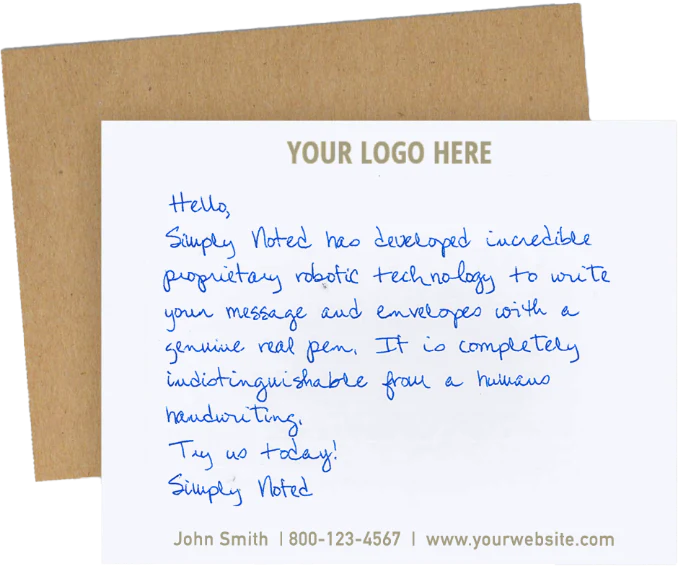
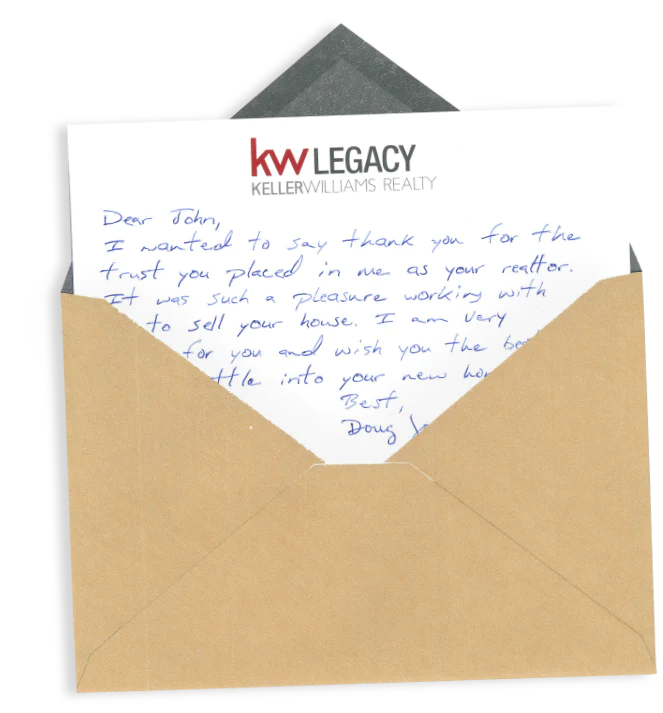
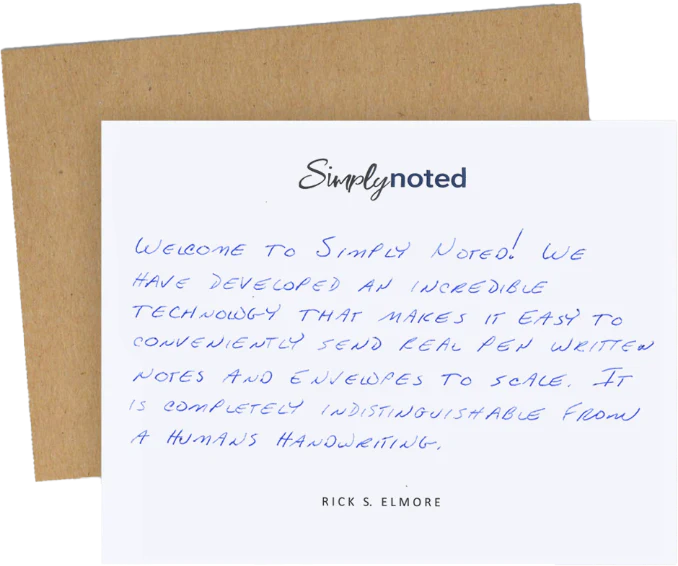
Automated handwritten note platforms are often the best fit for growing nonprofit organizations that need scale without losing the personalized touch. These platforms help nonprofits send handwritten-style mail after donations, events, and donor milestones while connecting to other tools in the fundraising workflow.
This option is useful for donor stewardship because it makes it easier to thank donors quickly and consistently. It also helps with direct mail campaigns, lapsed donor reactivation, and nonprofit thank you cards tied to specific campaigns. When done well, donors still receive a tangible reminder that feels thoughtful and intentional.
For organizations managing a large donor base, this is often the most cost effective balance between personalization and efficiency. It allows nonprofits to build relationships, encourage participation, and support future donations without overloading staff.
Handwrytten Blackbaud vs SimplyNoted Zapier
Handwrytten Blackbaud
Handwrytten Blackbaud is most relevant for nonprofit organizations that already rely heavily on Blackbaud for donor management and fundraising operations. The main advantage is workflow alignment. If the organization’s donor database, campaign records, and stewardship processes already live inside Blackbaud, a connected handwritten note system can simplify follow-up.
This can make sense for established nonprofit organizations that want tighter control over donor records and campaign triggers. It helps connect handwritten fundraising to existing workflows and may reduce manual exporting or list handling. For teams deeply invested in Blackbaud, that operational fit can be valuable.
The limitation is flexibility. Organizations using a broader mix of tools may find this setup less adaptable if they want handwritten notes tied to forms, spreadsheets, event tools, or other systems beyond one central platform.
SimplyNoted Zapier
SimplyNoted Zapier is a strong option for nonprofits that want flexibility across different tools and campaign workflows. With Zapier, handwritten notes can be triggered from a range of actions, including donations, event sign-ups, form submissions, CRM updates, and donor milestones. That makes it useful for nonprofits that need broad workflow automation rather than one narrow integration path.
This flexibility is important for donor stewardship because nonprofits often use multiple tools across fundraising, nonprofit marketing, volunteer management, and direct mail. SimplyNoted Zapier can help connect those systems without forcing the organization into a single software environment. That makes it easier to scale handwritten notes nonprofits campaigns while keeping outreach timely.
For many teams, this also reduces manual work. Instead of uploading lists repeatedly, the workflow can create cards when a donor gives, attends an event, or reaches a campaign milestone. That supports stronger donor engagement and faster follow-up.
Which Option Fits Different Nonprofit Organizations
Small nonprofits may prefer SimplyNoted Zapier because it offers flexibility without requiring a large software stack. It can connect to common tools and help smaller teams build donor stewardship systems that still feel personal.
Mid-sized nonprofit organizations can choose based on their current setup. If the team already works inside Blackbaud every day, Handwrytten Blackbaud may fit better. If the organization uses multiple platforms and wants more automation options, SimplyNoted Zapier may be the stronger choice.
Larger organizations with segmented donor stewardship systems should evaluate where data already lives and how many workflows need to trigger handwritten cards. The best choice is usually the one that reduces manual effort, improves consistency, and supports long-term donor relationships.
How to Use Handwritten Notes in Nonprofit Direct Mail Campaigns
Handwritten notes work best when they support a larger nonprofit direct mail strategy instead of standing alone. They can strengthen appeal letters, follow-up mail, event invitations, donor reactivation, and campaign milestone updates. This makes direct mail feel more personal and more memorable.
One effective approach is adding a handwritten card to a fundraising package. A short note tucked inside can help the mail stand out, create a stronger response, and make donors feel the organization is speaking directly to them.
Nonprofits can also add a QR code that links to a donation page, campaign site, or volunteer form. Combined with email campaigns and phone calls, handwritten outreach supports stronger donor stewardship.
See Also: Nice Things to Say to Someone: Simple Words That Mean a Lot
Best Practices for Better Donor Stewardship
Keep the message genuine and concise. Donors do not need long explanations. They respond better to sincere appreciation, a clear link to the mission, and a thoughtful reason to stay connected. A short handwritten note often creates a stronger impression than a long formal letter.
Use donor data carefully to make each message more relevant. Personalizing by name, campaign, gift level, or event participation makes handwritten outreach feel more meaningful and less generic. That helps strengthen donor relationships over time.
Timing and alignment also matter. Thank donors quickly after a gift or event, and make sure every card reflects the organization’s mission, tone, and communication style. Consistency builds trust and supports donor stewardship.
Common Mistakes Nonprofits Should Avoid
Generic notes are a common mistake. A handwritten format alone is not enough if the message feels templated or disconnected. Donors respond better when the note includes something specific, personal, and relevant to their support. This is especially important when showing appreciation to generous donors during a fundraising campaign.
Another mistake is slow follow-up. A thank you note sent too late loses impact. Nonprofit organizations that want better donor retention should make appreciation prompt, timely, and part of regular donor stewardship. Fast follow-up helps handwritten outreach feel sincere rather than delayed.
It is also a mistake to reserve handwritten outreach only for major donors or treat it as a separate tactic. First time donors, recurring donors, and re-engagement audiences also matter. Handwritten notes work best when tied to the full fundraising strategy or even broader full service nonprofit marketing efforts.
Why Handwritten Notes Are a Powerful Tool for Nonprofits

Handwritten notes nonprofits programs work because they combine emotional impact with practical fundraising value. They create a tangible reminder that stands out in a digital world, they help donors feel appreciated, and they support stronger donor engagement over time. Few tactics can do all of that with such a simple format.
They also help nonprofit organizations turn appreciation into a real retention strategy. Whether the goal is thanking donors, encouraging increased contributions, or reactivating lapsed supporters, handwritten notes help build relationships in a way that feels human. That human element remains critical in the nonprofit sector.
For organizations trying to raise funds more effectively, secure future donations, and build a stronger donor base, handwritten communication remains one of the most useful tools available. It is not old-fashioned. It is a practical, personal, and scalable way to strengthen relationships.
See Also: How Nonprofits Can Boost Donations and Delight Volunteers
Conclusion
Handwritten notes nonprofits strategies still matter because they help organizations create personal connections that digital outreach often misses. They support donor stewardship, improve donor retention, and give both new donors and existing donors a stronger sense that their support is valued. That can make a direct difference in fundraising success.
The best results come when nonprofits use handwritten notes across the right donor touchpoints, pair them with smart message templates, and choose service options that match their size and workflow. Some teams will benefit from DIY note writing or volunteer support. Others will need automation and integration through options like Handwrytten Blackbaud or SimplyNoted Zapier.
What matters most is consistency, personalization, and timing. When nonprofits use handwritten outreach as part of a broader fundraising strategy, they create stronger relationships, encourage repeat giving, and build a more loyal donor base over time.
Send a thoughtful handwritten card just because. Browse SimplyNoted’s collection and turn an ordinary moment into something personal and memorable.
FAQs
Do handwritten notes really help nonprofits keep donors?
Yes. Handwritten notes help donors feel appreciated and remembered. That personal touch can improve donor retention, strengthen donor relationships, and support future donations.
What’s the difference between donor thank you letters and cards?
Donation thank you letters are usually more formal and may include tax or gift details. Nonprofit thank you cards are shorter, warmer, and often better for donor stewardship and personal follow-up.
Are handwritten notes a good fit for nonprofit direct mail campaigns?
Yes. They work well in nonprofit direct mail because they create a tangible and lasting impression. They can support fundraising appeals, event follow-up, donor retention, and reactivation efforts.
Should nonprofits use DIY cards or automated handwritten note services?
It depends on scale. DIY cards work for smaller donor bases or special campaigns. Automated services are usually better for larger organizations that need consistent, timely, and scalable donor outreach.
Which is better for nonprofits: Handwrytten Blackbaud or SimplyNoted Zapier?
That depends on the organization’s systems. Handwrytten Blackbaud may fit better for Blackbaud-centered workflows. SimplyNoted Zapier is often better for nonprofits using multiple tools and wanting flexible automation.