Acknowledgements Funny: Hilarious Examples That Get Read
Funny Acknowledgements: Hilarious Examples That Will Actually Get Read
Let’s be honest: acknowledgements are skipped by most people. When readers reach the acknowledgements page, they expect polite thanks, formal wording, and predictable gratitude. That expectation alone makes the page easy to ignore.
Formal language drains personality from acknowledgements. It sounds careful, correct, and distant, even when the gratitude is real. In a busy world full of content, readers forget those pages almost immediately.
Funny acknowledgements break that pattern. Humor reflects real life, effort, mistakes, frustration, and truth, in a way formal language never can. This post will help readers write acknowledgements that feel human, accept them without embarrassment, and publish them with confidence instead of relief.
WHY TRADITIONAL ACKNOWLEDGEMENTS FAIL HALF THE TIME
Acknowledgements fail half the time because they feel required, not chosen. Writers rely on phrases they think they are supposed to use. The result is writing that sounds correct but empty.
Readers skim because nothing stands out. Every sentence blends into the next, offering no personality, no story, and no reason to slow down. Obligation replaces real gratitude, and readers feel that instantly.
Being correct is not the point. Being memorable is. Generic thanks are easy to forget in a crowded world, while specific, honest gratitude creates a moment worth reading.
WHAT MAKES ACKNOWLEDGEMENTS FUNNY (WITHOUT BEING WRONG)
There is a fine line between humor and sounding wrong. Humor fails when it feels forced, exaggerated, or careless. It works when it reflects something that actually happened.
Honesty always beats exaggeration. One strong, well-placed sentence will land better than a long paragraph trying too hard to be funny. Readers trust humor that feels lived-in rather than performed.
Funny acknowledgements still respect the audience. Parents, reviewers, editors, and friends all read with different expectations. Humor should be a deliberate writing style choice, not an afterthought added at the end.
FUNNY ACKNOWLEDGEMENTS VS TRADITIONAL ONES
Traditional acknowledgements aim to be safe, polite, and complete. Funny ones aim to be real and memorable. That single difference changes how the entire page feels.
Acknowledgements funny hilarious examples that will actually get read work because they surprise the reader. Surprise pulls attention back to the page and rewards curiosity. One unexpected word or line can change the emotional tone instantly.
Humor sticks longer than formality. A small laugh creates emotional memory, while polite wording fades quickly. Readers may forget details, but they remember how a page made them feel.
FUNNY ACKNOWLEDGEMENTS IN BOOKS: WHY AUTHORS GET AWAY WITH IT
Books allow more personality than a paper. Readers expect a human voice, especially at the end of a story. A funny acknowledgement feels like a final conversation rather than a closing formality.
The dedication page sets the tone, while the book dedication is usually brief and focused. Acknowledgements allow more space for reflection, humor, and honesty. When done well, humor supports the story instead of distracting from it.
Authors like Chelsea Handler use unapologetic humor because it matches their voice. Readers expect personality in a funny book, and consistency makes the humor feel earned rather than risky.
WHERE FUNNY ACKNOWLEDGEMENTS WORK BEST

Funny acknowledgements work best in spaces that allow voice and reflection. These include:
- Books such as fiction, memoirs, and poems
- Creative projects and long manuscripts
- Online posts and long-form content
Humor can also work in academic writing when used carefully and respectfully. However, it should be avoided in formal, legal, or sensitive material where clarity matters more than personality. Context always shapes tone and reader expectation.
SEE ALSO: Heartfelt Good Wishes: Perfect Messages for Every Occasion
FUNNY ACKNOWLEDGEMENTS IN ACADEMIC PAPERS (YES, REALLY)
Humor in academic papers works when it is subtle and respectful. The goal is to sound human without distracting from the research or upsetting a reviewer. Small moments of honesty often feel refreshing after dense material.
Effective approaches include:
- Light self-awareness instead of obvious jokes
- Using a footnote for gentle personality
- Staying correct, clear, and readable in your writing style
When done carefully, professors and editors often appreciate the honesty. Humor should never lead the paper, but it can quietly remind the reader that a real person did the work.
REAL-LIFE FUNNY ACKNOWLEDGEMENT STYLES (EXPLAINED)
The best funny acknowledgements come from real experience, not invented humor. Readers can tell when a joke is manufactured versus when it grew out of something that actually happened. Authenticity is what makes humor land.
One of the most effective styles is self-deprecating humor. Admitting confusion, missed deadlines, or lessons learned shows growth rather than ego. It also signals honesty without blaming anyone else.
Another approach is carefully thanking people who made the work harder. Editors, writers, and colleagues who pushed revisions or challenged ideas often deserve credit delivered with warmth. When humor reflects struggle turning into inspiration, it feels earned instead of clever.
ACKNOWLEDGING FAMILY, FRIENDS, AND KIDS WITH HUMOR

Acknowledging family works best when it feels warm rather than embarrassing. Thanking parents with gentle humor shows appreciation without crossing into oversharing. Readers respond well to sincerity wrapped in restraint.
Mentions of mom and dad often feel natural when tied to patience, support, or encouragement. Humor should highlight gratitude, not personal details. The goal is to honor support without turning the acknowledgements into a private joke.
When mentioning children, less is more. Cute moments can work, but future readers matter too. Writing about sons or daughters, including daughter Leonora, should feel timeless rather than trendy, ensuring the words age well.
FUNNY DEDICATION VS FUNNY ACKNOWLEDGEMENTS
A dedication and acknowledgements serve different purposes. A dedication is short, punchy, and focused on one idea or person. It works best when it delivers impact in a single line.
Acknowledgements allow more room for reflection. This is where story, context, and humor can live comfortably. It’s the space to explain how the work came together.
Splitting humor intentionally matters. A sharp dedication can hook the reader, while acknowledgements provide depth. When each page does its job, both feel stronger.
COMMON MISTAKES THAT RUIN FUNNY ACKNOWLEDGEMENTS
Trying too hard to be funny is the most common mistake. Forced jokes feel uncomfortable and distract from gratitude. Humor should sound natural, not performed.
Inside jokes also cause problems. If only one person understands the reference, most readers feel excluded. That confusion breaks connection instead of building it.
Sarcasm is another risk. What sounds playful to the writer may read as bitterness to others. Humor that ages badly creates regret, so it’s worth thinking long-term before publishing.
HOW TO WRITE FUNNY ACKNOWLEDGEMENTS STEP BY STEP
Start with truth, not jokes. Write down what actually happened before worrying about humor. Real moments naturally carry wit.
Write the acknowledgements like a note to a real person. Reading it out loud helps catch awkward sentences or forced lines. If it feels strange to say, it will feel strange to read.
Edit ruthlessly. Cut unnecessary words and keep sentences clean and intentional. Stop writing the moment it starts to feel like a performance rather than gratitude.
See Also: Guide to Wishing You All the Best
WHY READERS ACTUALLY LOVE FUNNY ACKNOWLEDGEMENTS
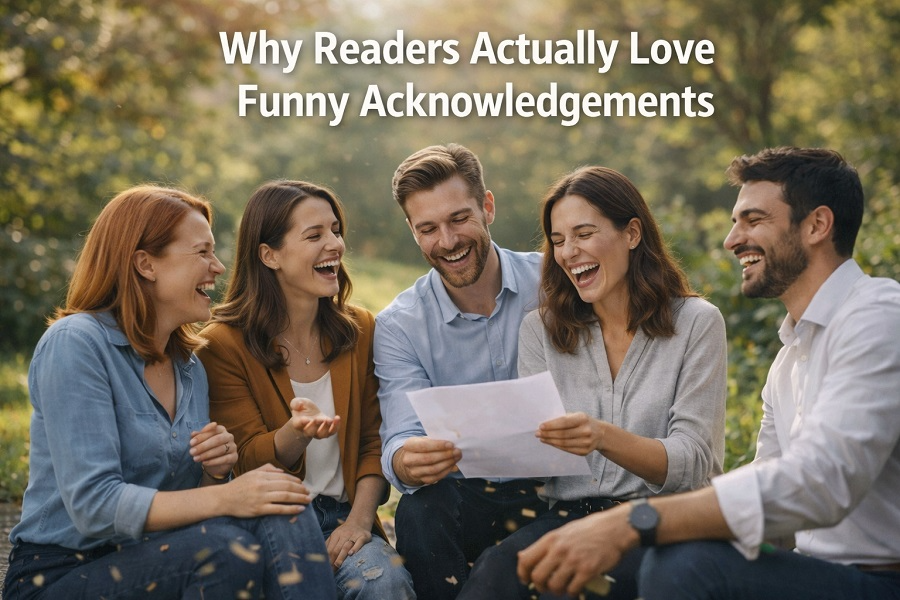
Funny acknowledgements feel human. They remind readers there is a real person behind the work, not just a polished final product. That connection matters.
They also feel honest. Readers quickly sense when humor comes from lived experience. Honesty builds trust faster than formality ever could.
Humor rewards curiosity. It encourages readers to stay until the end. A strong closing moment leaves a lasting impression.
FINAL THOUGHTS: HUMOR IS A GIFT, NOT A RISK
Acknowledgements are a rare chance to be real. There are no arguments to prove and no ideas left to defend. Only gratitude remains.
Humor should feel like appreciation, not attention-seeking. When used with care, it strengthens sincerity and warmth. It never needs to be loud to be effective.
Write something memorable. Readers may forget details, but they remember how a page made them feel. That same principle is why thoughtful, personal communication, like that encouraged by simplynoted, continues to resonate.
FAQS ABOUT FUNNY ACKNOWLEDGEMENTS
Can funny acknowledgements still feel sincere and respectful?
Yes, funny acknowledgements can feel sincere when humor is grounded in honestly expressed gratitude. A light tone does not remove meaning. In fact, readers often realized that humor paired with never failing sympathy can communicate appreciation more clearly than formal language ever could.
Are funny acknowledgements appropriate for books, poems, or creative work?
Funny acknowledgements work especially well in creative formats like books and poems. A thoughtful dedication page or a short note explaining who the work is dedicated to helps set expectations. Readers approach these pages with hope and curiosity, not rigid rules.
Should funny acknowledgements mention kids, family, or personal moments?
They can, if done carefully. Mentioning kids, parents, or family moments works best when it stays brief and helpful to the tone of the page. Avoid inside jokes or excessive detail. The goal is warmth, not turning the acknowledgements into a private set of comments.
Will reviewers or readers take funny acknowledgements seriously?
Most readers and even academic review audiences respond well when humor is subtle and thoughtful. For many writers, it is the first time acknowledgements feel readable rather than procedural. A short chapter mention or how the book was called together, even referencing the cover, can feel amazing when done with restraint.