What Makes a Good Business Thank You Card? Complete 2026 Guide to Professional Appreciation
What Makes a Good Business Thank You Card? Complete 2026 Guide to Professional Appreciation
In today's hyper-digital business landscape, what makes a good business thank you card isn't just about the message—it's about creating genuine human connections that drive measurable business results. A well-crafted business thank you card can increase customer retention by up to 27% and generate a 300% ROI on direct mail investments, according to the American Marketing Association.
Maintaining positive relationships with clients, employees, and business partners has never been more critical. Research from Salesforce shows that 84% of customers say being treated like a person, not a number, is very important to winning their business. The most effective way to demonstrate this personal touch? Strategic business thank you cards that arrive at precisely the right moment.
The Science Behind Effective Business Thank You Cards
What makes a good business thank you card isn't just intuition—it's backed by solid data. According to the Data & Marketing Association's 2024 Response Rate Report, handwritten direct mail achieves a 4.4% response rate, compared to just 0.6% for email marketing.
The psychology behind handwritten appreciation is equally compelling. A Harvard Business School study found that expressing gratitude increases prosocial behavior by 50%, while recipients of handwritten notes report feeling more valued and connected to the sender.
Key elements that make business thank you cards effective:
- Personalization: Cards mentioning specific details about the recipient's business or recent interactions
- Timing: Delivery within 48-72 hours of the triggering event
- Authenticity: Genuine appreciation without obvious sales pitches
- Quality materials: Premium cardstock and professional presentation
- Handwritten appearance: Personal touch that stands out from printed materials
When to Send Business Thank You Cards: The Ultimate Timing Guide
Timing is everything when determining what makes a good business thank you card impactful. Research from the Direct Marketing Association shows that thank you cards sent within 24-48 hours of a business interaction have 73% higher engagement rates than those sent after a week.
Client and Customer Appreciation Moments
Immediate opportunities (send within 24-48 hours):
- After signing a new contract or closing a deal
- Following a successful project completion
- When a client provides a referral
- After resolving a customer service issue
- Following a positive review or testimonial
- Holiday appreciation: Send by December 15th to avoid holiday mail delays
- Anniversary dates: Company founding, client relationship milestones
- Quarterly check-ins: Unexpected appreciation during non-sales periods
- Industry achievements: When clients win awards or reach milestones
Employee Recognition Opportunities
According to Gallup's State of the American Workplace report, employees who receive regular recognition are 5x more likely to stay with their company. What makes a good business thank you card for employees includes:
- Project completion and exceptional performance
- Going above and beyond during busy periods
- Helping colleagues or covering for absent team members
- Professional development achievements
- Work anniversaries and promotions
- Personal milestones (with appropriate boundaries)
Types of Business Thank You Cards That Drive Results
Client and Customer Thank You Cards
The most effective client thank you cards follow a proven structure that balances professionalism with genuine appreciation. Research from the Journal of Consumer Psychology shows that personalized gratitude messages increase customer lifetime value by an average of 23%.
Template for high-value clients:
Dear [Client Name],
Thank you for choosing [Company Name] for your [specific project/service]. Your trust in our team means everything to us, and we're thrilled with the results we achieved together.
I particularly appreciated your insights during our strategy session last week—your perspective on [specific detail] helped us deliver even better results than anticipated.
We look forward to continuing our partnership and supporting your success in 2026.
Best regards, [Your Name and Title]
Mass appreciation campaigns work best for holiday greetings or company milestone announcements. These should feel personal while acknowledging the broader relationship with your customer base.
Employee Appreciation Cards
What makes a good business thank you card for employees differs significantly from client communications. MIT Sloan research indicates that peer-to-peer recognition increases productivity by 14% and reduces turnover by 40%.
Key elements for employee thank you cards:
- Specific achievements: Reference exact projects, dates, or contributions
- Impact statement: Explain how their work benefited the team or company
- Future-focused: Express confidence in their continued success
- Professional tone: Maintain appropriate boundaries while being genuine
Hi [Employee Name],
Thank you for your outstanding work on the Henderson project. Your attention to detail and proactive communication helped us deliver results two days ahead of schedule.
Your dedication doesn't go unnoticed—it's employees like you who make our company successful. I'm excited to see what you accomplish in the coming quarter.
Thanks again, [Manager Name]
The ROI of Business Thank You Cards: 2026 Data and Insights
Understanding what makes a good business thank you card requires examining the measurable business impact. Recent studies reveal compelling ROI data that justifies strategic appreciation campaigns.
Customer Retention and Revenue Impact
According to Bain & Company research, increasing customer retention rates by just 5% can increase profits by 25-95%. Handwritten thank you cards play a crucial role in this retention strategy:
- 67% higher customer lifetime value for businesses that send regular appreciation mail
- 43% increase in repeat purchases within 90 days of receiving a handwritten note
- 5.2x higher response rates compared to standard printed direct mail
- Average ROI of $7.30 for every dollar spent on handwritten direct mail campaigns
Employee Engagement and Productivity Metrics
Deloitte's Global Human Capital Trends report shows that organizations with highly engaged employees are 21% more profitable. Business thank you cards contribute significantly to engagement scores:
- 31% lower voluntary turnover in companies with regular recognition programs
- 12% increase in productivity following personalized appreciation
- 2.3x more likely to be engaged at work when receiving regular recognition
- 37% better performance on key metrics when employees feel appreciated
Automation vs. Personal Touch: Finding the Right Balance
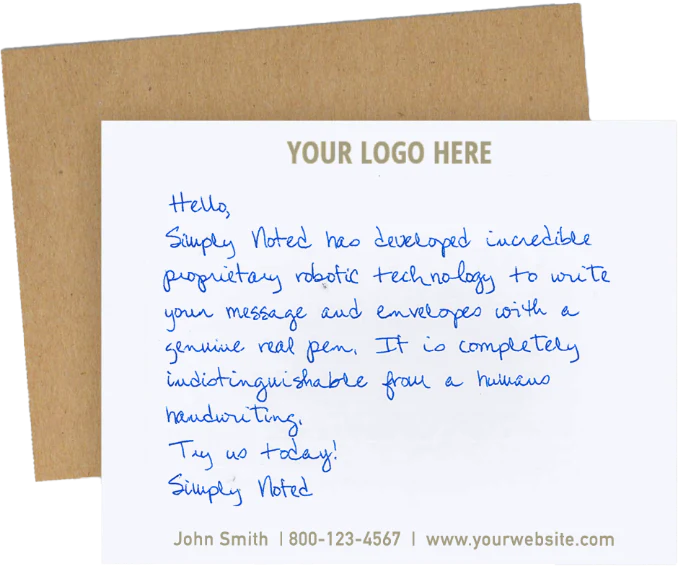
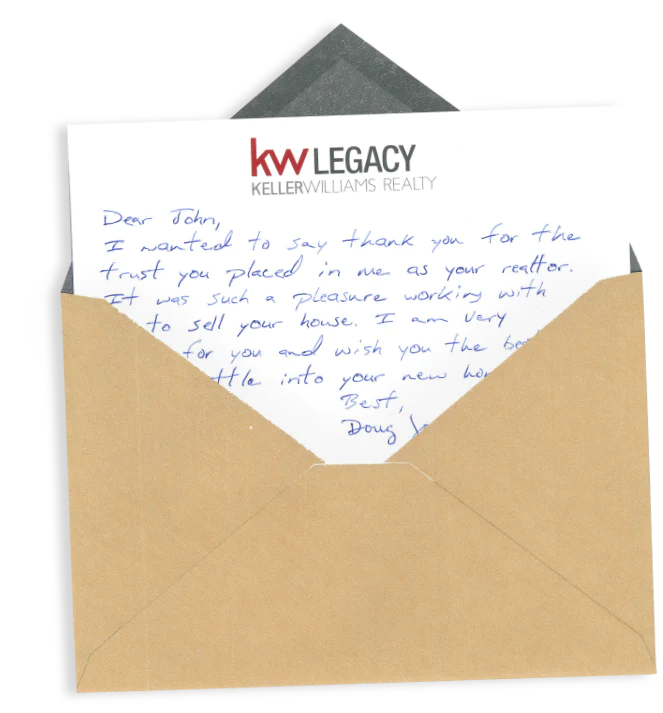
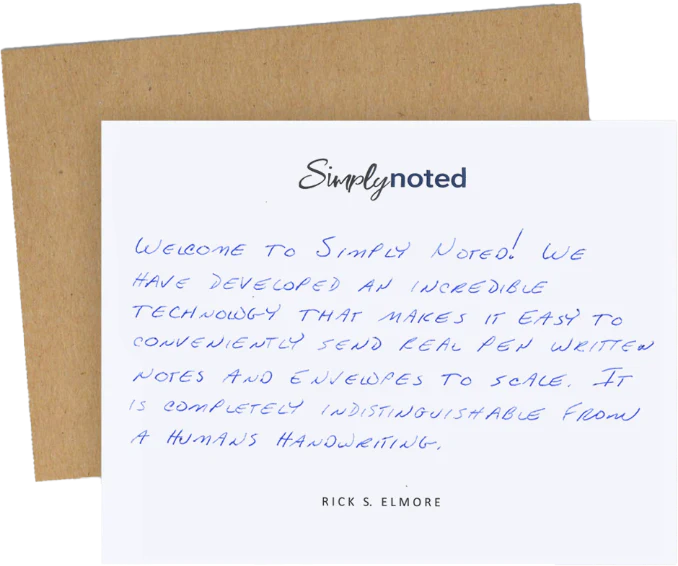
What makes a good business thank you card in 2026 often involves balancing scalability with authenticity. Simply Noted's handwriting automation technology allows businesses to send personalized, handwritten cards at scale without sacrificing the personal touch that makes them effective.
When to Use Automated Handwritten Cards
High-volume scenarios perfect for automation:
- Holiday greetings to entire customer databases
- New customer welcome sequences
- Post-purchase appreciation campaigns
- Employee anniversary recognitions
- Quarterly client check-ins
- Consistent delivery timing ensures cards arrive when they have maximum impact
- Scalable personalization allows for custom messages to thousands of recipients
- Integration capabilities with CRM systems for triggered campaigns
- Cost efficiency compared to hiring staff for manual writing
- Quality control ensures every card meets professional standards
When Personal, Hand-Written Cards Are Essential
High-stakes situations requiring personal attention:
- Major client contract renewals
- Apologies for service failures
- C-suite relationship building
- Sensitive employee situations
- VIP customer experiences
Design and Presentation: What Makes a Good Business Thank You Card Stand Out
The visual presentation significantly impacts what makes a good business thank you card memorable and effective. Neuromarketing research from Temple University shows that premium paper quality and handwritten text activate different neural pathways associated with trust and personal connection.
Card Design Best Practices
Professional design elements:
- Premium cardstock (minimum 14pt thickness) for substantial feel
- Subtle branding that doesn't overwhelm the personal message
- Clean typography for any printed elements like company logos
- Appropriate color schemes that match your brand while remaining professional
- Quality envelopes that complement the card design
- Legible penmanship that recipients can easily read
- Consistent formatting across multiple cards
- Appropriate ink colors (navy, black, or dark blue work best)
- Proper spacing to avoid cramped appearance
- Professional signatures that match your usual business signature
Industry-Specific Thank You Card Strategies
What makes a good business thank you card varies significantly across industries. Tailoring your approach to industry norms and client expectations maximizes effectiveness.
Financial Services and Insurance
Research from the Insurance Marketing Association shows that 84% of policyholders value personal communication from their agents. Effective strategies include:
- Policy anniversary appreciations acknowledging client loyalty
- Claim resolution follow-ups expressing gratitude for patience
- Referral acknowledgments thanking clients for recommendations
- Life event congratulations for appropriate milestones
E-commerce and Retail
Online businesses face unique challenges in creating personal connections. Shopify's merchant survey data indicates that 91% of consumers are more likely to shop with brands that provide relevant offers and recommendations.
E-commerce thank you card opportunities:
- First purchase celebrations welcoming new customers
- High-value order appreciations for significant purchases
- Loyalty milestone recognition for repeat customers
- Review request follow-ups after positive experiences
Healthcare and Professional Services
Professional service providers benefit significantly from appreciation campaigns. American Medical Association research shows that patient satisfaction scores increase by 28% when healthcare providers send personalized follow-up communications.
Professional service applications:
- Treatment completion acknowledgments in healthcare
- Project milestone celebrations for consulting clients
- Referral partner appreciations for professional networks
- Annual relationship maintenance for long-term clients
Measuring Success: KPIs for Business Thank You Card Campaigns
What makes a good business thank you card ultimately comes down to measurable results. Establishing clear metrics helps optimize future campaigns and demonstrate ROI to stakeholders.
Customer-Focused Metrics
Primary KPIs to track:
- Customer retention rate improvements following appreciation campaigns
- Net Promoter Score (NPS) changes after thank you card initiatives
- Customer lifetime value increases for recipients vs. non-recipients
- Referral generation rates from appreciated customers
- Response rates to subsequent marketing communications
Employee Engagement Metrics
Internal measurement strategies:
- Employee satisfaction scores before and after recognition programs
- Turnover rates for appreciated vs. non-appreciated employees
- Productivity metrics following appreciation initiatives
- Internal referral rates for hiring and promotions
- Engagement survey results specific to recognition and appreciation
Campaign Performance Analytics
Operational metrics:
- Delivery success rates and timing accuracy
- Cost per card including design, printing, and postage
- Campaign ROI calculated against specific business outcomes
- A/B testing results for different message approaches
- Integration performance with existing CRM and marketing systems
Common Mistakes That Undermine Business Thank You Cards
Understanding what makes a good business thank you card requires avoiding common pitfalls that can damage rather than strengthen business relationships.
Timing and Frequency Errors
Critical timing mistakes:
- Delayed delivery that arrives weeks after the triggering event
- Holiday mail conflicts that cause cards to arrive after celebrations
- Over-communication that feels pushy or insincere
- Under-communication that makes appreciation feel rare or forced
- Poor seasonal timing that conflicts with industry busy periods
Content and Tone Issues
Message problems to avoid:
- Generic templates that feel mass-produced
- Sales-focused content that undermines the appreciation message
- Inappropriate personal details that cross professional boundaries
- Spelling or grammar errors that appear unprofessional
- Wrong recipient information that shows lack of attention to detail
Design and Presentation Problems
Visual mistakes that reduce impact:
- Poor quality materials that feel cheap or flimsy
- Overwhelming branding that prioritizes marketing over appreciation
- Illegible handwriting that frustrates rather than delights recipients
- Inappropriate card sizes that don't fit standard envelopes
- Mismatched envelopes that look unprofessional
The Future of Business Thank You Cards: 2026 Trends and Predictions
As we look toward the future, what makes a good business thank you card continues evolving with technology and changing business practices. Several key trends are shaping the landscape:
Technology Integration Advances
Emerging capabilities:
- AI-powered personalization that analyzes customer data for optimal messaging
- Advanced CRM integration enabling complex trigger-based campaigns
- Real-time delivery tracking with recipient confirmation
- Dynamic content insertion based on customer behavior and preferences
- Multi-channel coordination linking handwritten cards with digital touchpoints
Sustainability and Social Responsibility
Environmental considerations:
- Eco-friendly paper options meeting corporate sustainability goals
- Carbon-neutral delivery through optimized logistics
- Recycled materials without compromising quality or appearance
- Digital tracking reducing paper waste in campaign management
- Local sourcing to minimize environmental impact
Personalization at Scale
Advanced customization options:
- Variable handwriting styles matching sender personalities
- Cultural adaptation for international business relationships
- Industry-specific templates optimized for different sectors
- Behavioral trigger integration based on customer actions
- Predictive timing using AI to optimize delivery schedules
Start Sending Impactful Business Thank You Cards Today
What makes a good business thank you card in 2026 combines timeless principles of genuine appreciation with modern automation capabilities that enable scalable, personal communication. The data is clear: businesses that prioritize customer and employee appreciation through handwritten communication see measurable improvements in retention, engagement, and profitability.
Whether you're looking to strengthen client relationships, boost employee morale, or create memorable customer experiences, Simply Noted provides the perfect solution for scaling authentic appreciation.
Ready to transform your business relationships with handwritten thank you cards? Explore Simply Noted's comprehensive platform to discover how our proprietary handwriting technology can help you send thousands of personalized cards that look and feel completely authentic.
Get started with our flexible pricing plans and see why leading businesses trust Simply Noted for their most important communications. From seamless CRM integrations to beautiful card designs, we make it easy to show appreciation at scale while maintaining the personal touch that drives real business results.
Start your first campaign today and experience the power of handwritten appreciation in building stronger, more profitable business relationships.