Professional Sign Off Letter: How to End Business Messages Correctly
Simply Noted writes and mails real pen-and-ink cards for businesses. See handwritten notes for business →
A professional sign off letter is the final impression you leave after the entire letter has been read. It may look like a small detail, but it often determines how your message is remembered. Whether you are writing a business letter, a formal letter, or a business email, the closing line and sign off work together to reinforce your professional tone.
In professional correspondence, the sign off is not just a habit or a formality. It signals respect, confidence, and clarity. A thoughtful sign-off helps end your letter smoothly, shows awareness of the professional setting, and supports the intended message without repeating the entire letter.
When done well, a professional sign off letter creates trust, leaves a positive impression, and makes your communication feel complete rather than rushed.
WHAT IS A PROFESSIONAL SIGN-OFF LETTER?
A professional sign off letter refers to the closing section of a professional letter or email, including the closing phrase, sign off, and identifying details. This part appears after the closing paragraph and serves as the final point of contact between you and the letter’s recipient
In writing business letters, the sign off usually includes a formal closing, your name, job title, and relevant contact information. In business emails, it often appears alongside an email signature and supports the overall email’s tone.
Unlike informal sign-offs used in personal emails, a professional sign off letter follows accepted business communication standards. It reflects professionalism, attention to detail, and awareness of how business correspondence works in formal settings.
SEE ALSO: Heartfelt Good Luck Notes for Every Occasion
WHY THE RIGHT SIGN OFF MATTERS IN BUSINESS COMMUNICATION
The right sign off does more than politely end your letter. It reinforces your credibility and helps maintain professionalism across professional emails, paper letters, and formal business letters.
A strong sign off respects the recipient’s time and signals that the message was carefully written from start to finish. It also shapes the relationship with the recipient by matching the level of formality to the professional context.
In many cases, the closing statement is the last thing the reader remembers. Choosing an appropriate sign off helps ensure a good impression, supports professional communication goals, and avoids sounding overly casual or impersonal. In business correspondence, small choices at the end of a letter can have a lasting impact.
BUSINESS LETTER VS EMAIL SIGN OFF , WHAT’S THE DIFFERENCE?
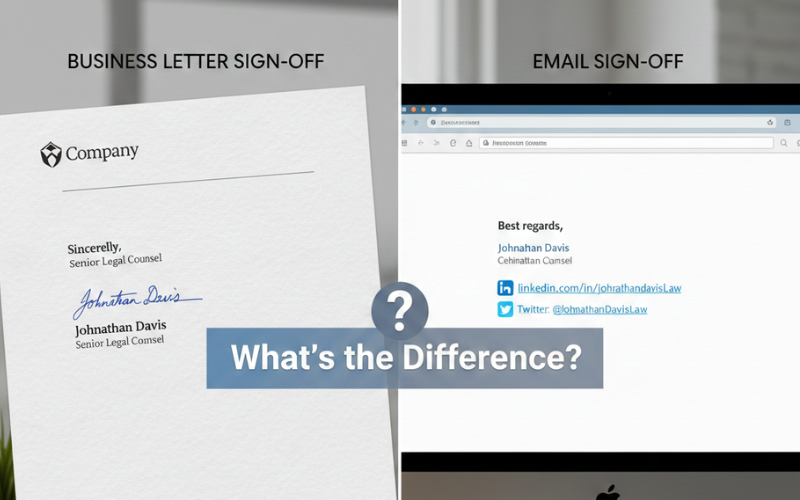
A professional sign off letter does not look the same in every situation. The difference between a business letter and a business email matters, especially in professional correspondence where expectations change based on format.
In a formal business letter or paper letter, the sign off follows a more traditional structure. Formal letter closings are typically longer, more deliberate, and paired with a handwritten signature. This format is common in cover letters, job application documents, and official business correspondence where formality is expected.
By contrast, an email sign off must balance professionalism with efficiency. Business email sign offs are often shorter, but they still need to maintain professionalism and suit the email’s tone. While informal email habits may be common, professional emails still require the right email sign off to avoid sounding overly casual or abrupt.
Understanding this distinction helps ensure your sign off fits the professional context and supports the entire letter or message in the same way it began.
See Also : 15 Ways to Say "I Appreciate You"
BUSINESS LETTER FORMAT AND WHERE THE SIGN OFF GOES
Following the correct business letter format ensures your professional letter looks polished and intentional. In most cases, the letter is written in block format, with all content aligned to the left margin, including the closing line and sign off.
The sign off appears after the closing paragraph and is separated by a line space. The first word of the sign off typically begins with a capital letter, especially in a formal closing. After the sign off, the writer includes their name, job title, business name, and relevant contact details.
In a formal letter, spacing and placement matter just as much as word choice. A poorly placed sign off can weaken the entire letter, while a correctly formatted closing reinforces clarity, structure, and professionalism from start to finish.
HOW TO CHOOSE THE APPROPRIATE SIGN OFF
Choosing the appropriate sign off depends on more than habit. It requires understanding the relationship with the recipient, the professional setting, and the intended message of the entire letter.
In formal settings, a formal sign off helps maintain professionalism and respect. In less formal professional contexts, a more informal closing may be acceptable, as long as it does not appear unprofessional or overly casual. The right sign off should always match the tone established in the closing paragraph.
Consider whether the message is part of ongoing business correspondence or a first interaction. The letter’s recipient, their role, and the purpose of the message all influence what feels appropriate. When chosen carefully, the ideal sign off strengthens professional communication and leaves a good impression without distracting from the message itself.
SEE ALSO: Heartfelt Good Wishes: Perfect Messages for Every Occasion
BUSINESS LETTER CLOSING EXAMPLES (FORMAL AND PROFESSIONAL)
Choosing the right closing can feel difficult, especially when writing business letters that need to sound confident and respectful. Business letter closing examples help clarify what works in a professional context and why certain letter closings are preferred over others.
In a formal business letter, common business letter closings include structured, traditional phrases that support a professional tone. These closings work best when paired with a clear closing paragraph and a complimentary closing that feels complete rather than rushed. Many formal letter closings use more than one word and avoid informal language to maintain credibility.
For business correspondence such as cover letters, job application documents, or official requests, the closing phrase should align with the entire letter’s purpose. A well-chosen closing statement reinforces the intended message, respects the recipient’s attention, and ensures the entire letter ends on a strong, professional note.

An email sign off plays a similar role to a letter closing but must adapt to the faster pace of digital communication. In professional emails, the sign off should feel polished while still sounding natural.
Common business email sign offs balance clarity and warmth. They signal that the message is complete, respect the recipient’s time, and maintain professionalism without sounding stiff. In a professional setting, the right email sign off supports the email’s tone and avoids confusion or abrupt endings.
When you email professionally, it’s important to avoid informal sign offs that feel more suitable for personal emails. Even in ongoing conversations, professional correspondence benefits from consistency. Choosing the right email sign off helps your business email feel intentional, respectful, and easy to respond to.
BEST REGARDS, KIND REGARDS, AND OTHER PROFESSIONAL CLOSINGS EXPLAINED
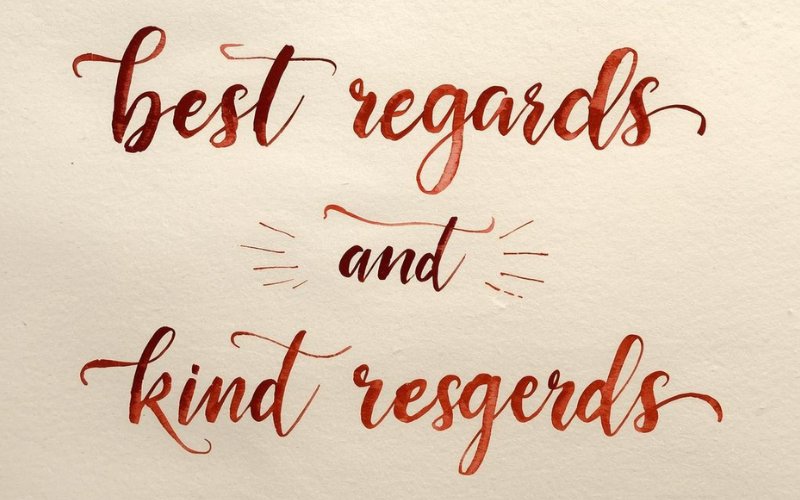
Some sign offs appear frequently because they work well across many professional contexts. Best regards is widely used in professional letters and professional emails because it is neutral, polite, and adaptable. It creates a positive impression without sounding overly formal.
Kind regards and warm regards introduce a slightly more personal touch while still maintaining professionalism. These options work well when there is an established relationship with the recipient or a close relationship built through repeated professional communication. Best wishes and warm wishes can also be appropriate when the tone allows for a softer closing.
The key is choosing the right sign off for the situation. An appropriate sign off reflects word choice, context, and intent. When used correctly, these professional letter closings strengthen your message and leave the reader with a sense of clarity and goodwill.
EMAIL SIGNATURE AND WHAT TO INCLUDE AFTER THE SIGN OFF
An email signature is an essential part of ending professional emails correctly. After the sign off, it provides clarity and helps the recipient know exactly who you are and how to respond. In professional correspondence, this section supports trust and transparency.
A complete email signature typically includes your name, job title, business name, and relevant contact information. In some professional contexts, adding contact details such as a phone number or website helps streamline communication. This is especially useful in business emails where follow-ups are expected.
Consistency matters. Using the same professional email signature across professional emails helps maintain professionalism and reinforces your professional tone. Whether you are writing a formal letter or emailing professionally, the signature should complement the sign off rather than distract from it.
HOW TO END YOUR LETTER WITH CONFIDENCE AND CLARITY
To end your letter well, the closing line should feel intentional and aligned with the entire letter. This final section works together with the sign off to bring the message to a natural close.
A strong closing paragraph often includes a meaningful sentence that reflects the purpose of the message. Phrases such as “look forward” or “forward to hearing” are commonly used when appropriate, as they guide the next step without pressure. In professional settings, this approach respects the recipient’s time and keeps the exchange professional.
Whether you are ending a business letter, a paper letter, or a business email, the goal is the same. End your letter in a way that supports clarity, leaves a good impression, and reinforces professional communication without sounding repetitive.
COMMON SIGN OFF MISTAKES TO AVOID IN PROFESSIONAL CORRESPONDENCE
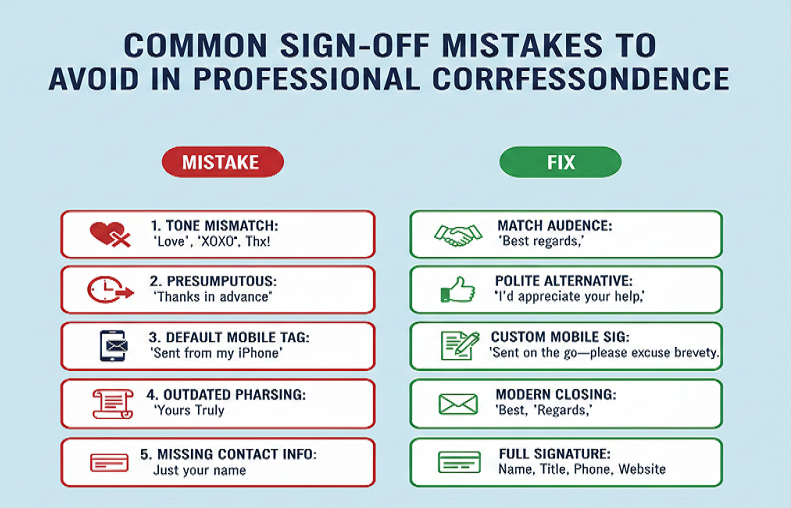
Even experienced professionals make mistakes when choosing a sign off. One common issue is using informal sign offs or an informal closing in a professional context. While these may work in personal emails or a close relationship, they can weaken professional correspondence.
Another mistake is sounding overly casual or ending the message abruptly without a clear closing statement. This can confuse the letter’s recipient or make the message feel unfinished. Using the same way to close every message, regardless of context, can also reduce impact.
To maintain professionalism, it’s important to consider word choice, tone, and audience each time you write. Avoid shortcuts, ensure the sign off fits the professional setting, and remember that the final lines of your message often shape the recipient’s lasting impression.
See Also: Send Real Handwritten Notes to your
HANDWRITTEN SIGNATURES AND WHY THEY STILL MATTER
In a digital-first world, a handwritten signature still carries weight. When included in a professional sign off letter, it adds authenticity and signals care. This is especially true for a paper letter, where the physical act of signing reinforces credibility and intention.
A handwritten signature creates a stronger personal touch than a typed name alone. It shows effort and attention, which can positively influence how the message is received. In professional correspondence, this detail often helps the sender stand out and leaves a more memorable impression.
For formal letters and business correspondence, a handwritten signature works best when paired with a clear formal closing and accurate contact details. Together, they help ensure the letter feels complete, thoughtful, and genuinely professional.