How to Outsource Handwritten Letters: Robots vs. Humans vs. Print

How to Outsource Handwritten Letters — Comparing Robots, Humans, and Print Services
Many businesses want a personal touch, but writing handwritten letters in-house takes time, effort, and coordination. When larger orders, repeat campaigns, and ongoing customer follow-up are involved, the work can quickly become difficult to manage. That is why many companies now look for smarter ways to outsource handwritten letters without losing quality.
Handwritten mail still stands out in a world filled with digital noise, crowded inboxes, and generic print. A real message on paper feels more personal, more thoughtful, and more likely to get attention. Whether the goal is marketing, appreciation, or outreach, handwritten letters often create stronger first impressions and better responses.
Most businesses compare three options before choosing a service: human handwriting, robot handwritten letters, and standard print services. Each option offers different strengths in cost, speed, authenticity, and scale. This guide explains those differences clearly. Simply Noted enhances customer relationships through the unique power of authentic handwritten notes.
See Also: SimplyNoted vs. IgnitePost vs. Thankster: Best Automation Platform 2026
Why Businesses Want to Outsource Handwritten Letters
Businesses outsource handwritten letters because doing everything in-house is rarely practical. Writing each message, preparing envelopes, checking address details, and handling postage takes time that teams could spend on sales, service, or operations. As campaigns grow, the entire process becomes harder to manage consistently, especially when deadlines matter.
Outsourcing also helps when companies need bulk mail for larger orders or recurring campaigns. A handwritten letter writing service can support thank-you notes, prospecting, customer follow-up, referral outreach, direct mail campaigns, and event follow-ups. Instead of asking staff to pause core work, businesses can use a service designed to create and send handwritten mail efficiently.
Another reason is performance. Handwritten direct mail often feels personal, authentic, and thoughtful, which can improve response rates compared with standard print. That personal touch can strengthen trust, keep customers engaged, and support better customer lifetime value. For many brands, the goal is not only sending letters, but building stronger relationships that last.
What Counts as Outsourced Handwritten Mail?
To outsource handwriting means using another service, person, or system to create and send handwritten mail on your behalf. This can include handwritten letters, handwritten notes, handwritten cards, handwritten envelopes, handwritten mailers, and direct mail letters. The main idea is simple: your business provides the message, and the service handles the writing and mailing work.
Not every provider handles the same parts of the process. Some only focus on writing handwritten letters, while others manage the entire process from stationery selection to envelopes, addressing, postage, and mail delivery. That difference matters because a complete service can save more time and reduce errors when campaigns need to move quickly.
Many modern platforms also offer useful tools beyond handwriting itself. Businesses may get templates, personalization options, app-based ordering, and CRM integrations that make it easier to send handwritten letters at scale. These features help teams manage recipients, organize campaigns, and keep outreach more efficient without losing the authentic feel of handwritten communication.
The Three Main Ways to Outsource Handwritten Letters
Human writers
This option uses real people to write letters by hand. It is often the best choice for heartfelt messages, luxury outreach, and situations where natural variation matters most. Human handwriting usually feels warm, personal, and authentic in a way many recipients notice immediately.
The downside is speed and scale. When businesses need bulk campaigns or larger orders, relying on people alone can become slower, harder to manage, and more expensive over time.
Robot handwritten letters
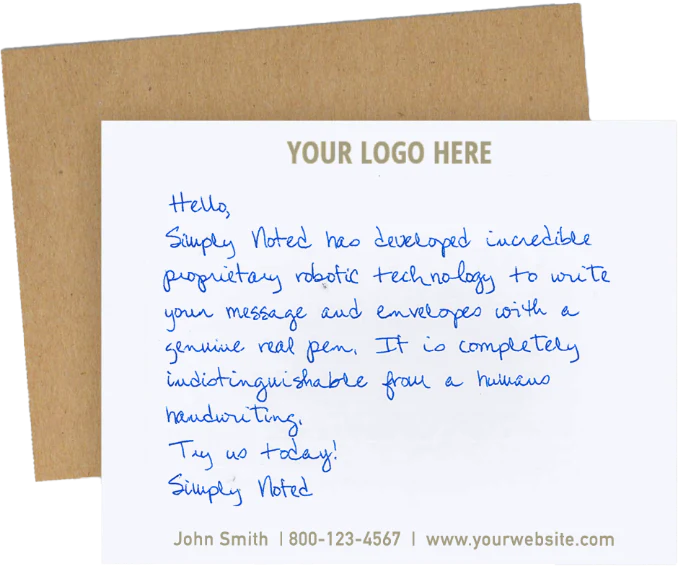
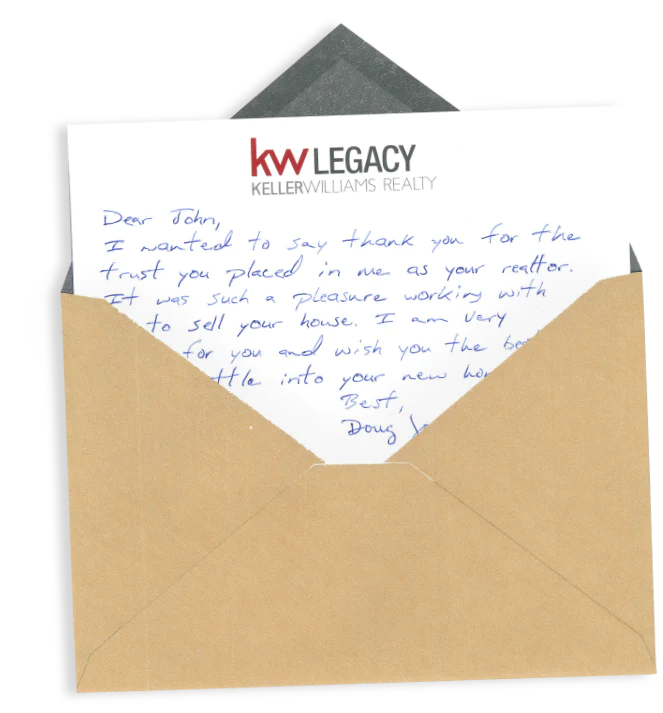
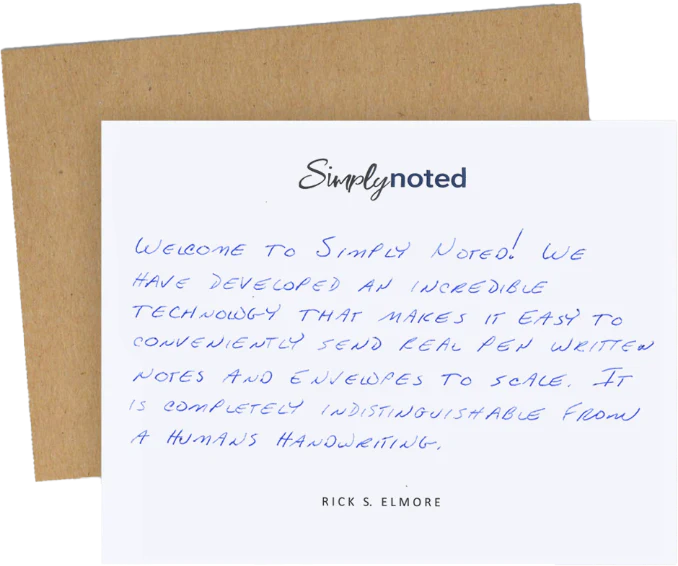
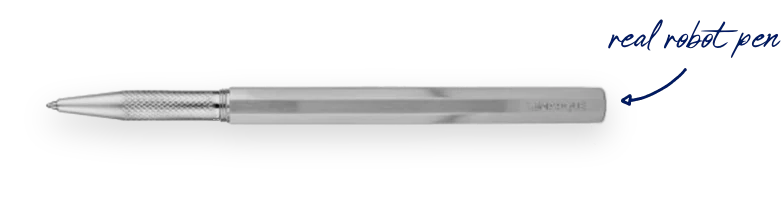
This option uses machines that hold real pens and write with real ink on paper. Robot handwritten letters are different from standard print because they create a handwritten look that feels more personal while still supporting business efficiency and consistent quality.
They are often a strong fit for companies that want to outsource handwritten letters at scale. They balance authenticity, speed, and repeatability better than many manual systems.
Print services
Print services use standard fonts and digital printing to create letters that look clean, uniform, and efficient. They are usually the easiest option for low cost, high speed, and simple production, especially when businesses need to send large amounts of mail quickly.
The tradeoff is personal impact. Printed letters often feel less authentic, less human, and less memorable than real handwritten letters, especially in direct mail marketing and relationship-focused outreach.
See Also: Handwritten Note Generator vs. Real Services: What Actually Works?
Comparing Human vs Robot vs Print for Authenticity
Authenticity in handwritten mail is about how real, personal, and thoughtful the message feels when it arrives. Human handwriting usually creates the strongest emotional response because it has natural variation, small imperfections, and a personal form that feels genuinely written. That makes it especially effective for emotional messages, appreciation notes, and personal communication.
Robot handwritten letters offer a different type of authenticity. They are more consistent, but they still use real pens and real ink, which helps them look and feel like real handwritten letters. In the human vs robot handwriting comparison, robots often win on consistency and scale, while humans feel more naturally personal and expressive.
Print services are the easiest to identify as printed, even when fonts try to imitate handwriting. They can look neat and professional, but they often miss the personal touch that makes handwritten mail stand out. Recipients usually react differently when a message feels truly personal, and that reaction can have a huge impact on responses.
Which Option Works Best for Scale and Bulk Campaigns?

Scale matters when a business needs to send handwritten letters regularly or in high volume. Human writers can work well for smaller campaigns, but they are harder to manage for bulk outreach. Writing by hand takes time, and larger orders usually require more coordination, more labor, and more patience than many teams can afford.
Robot handwritten letters are often the strongest option for scale. They allow businesses to manage campaigns, reach prospects, support customer retention, and send personalized mail without slowing down the process. For direct mail marketing, this balance between a handwritten look and operational efficiency makes robots a practical choice for many growing companies.
Print services are still the easiest option for bulk production. They can move fast, keep costs low, and support large direct mail campaigns with less manual work. The challenge is that printed letters may not stand out as much. In customer outreach, scale matters, but so does the ability to make recipients feel noticed and valued.
Cost Comparison: Humans, Robots, and Print Services
Cost depends on more than writing alone. Human handwriting often comes with higher labor costs, slower production, and more expense for large campaigns. When businesses hire someone to write handwritten letters manually, the personal result can be strong, but the time and effort required usually make this the most expensive option as volume increases.
Robot handwritten letters usually offer a more balanced cost structure. They help businesses combine authenticity with efficiency, making them attractive for campaigns that need both scale and a handwritten feel. Print services are normally the lowest-cost option, especially when speed matters, but they may offer lower perceived value if recipients see them as generic or less personal.
There are also hidden cost factors many businesses forget to review. Paper quality, envelopes, postage, personalization, mailing list cleanup, design changes, and setup needs can all affect the final cost. The cheapest option is not always the smartest one. If lower cost also means lower response rates, the overall results may be weaker.
Option |
Cost Level |
Best For |
Main Limitation |
|---|---|---|---|
Human handwriting |
High |
Heartfelt, one-to-one letters |
Expensive and slow for bulk |
Robot handwritten letters |
Medium |
Scalable campaigns with a personal feel |
Less emotional than true human writing |
Print services |
Low |
Fast, high-volume mailings |
Least personal and easier to ignore |
Speed and Turnaround Time: What Businesses Should Expect
Turnaround time can vary a lot depending on how a service creates and sends handwritten mail. Human writers often need more time, especially when requests are highly customized or when larger orders require careful coordination. If a business wants detailed personalization, custom wording, or special stationery, the writing and review process may naturally move more slowly.
Robot systems usually work faster because they are built for efficiency and repeatable workflows. They can handle campaigns, customer outreach, and direct mail letters with more consistency than manual writing alone. This makes robot handwritten letters useful for businesses that need dependable timing without giving up the handwritten appearance that helps mail stand out.
Print services are often the fastest option, especially for simple mailers and bulk notices. Still, businesses should think beyond speed alone. Deadlines, seasonal pushes, event follow-ups, and direct mail campaigns all require the right balance of timing and impact. Fast delivery matters, but so does sending a message that recipients will actually notice and remember.
See Also : 78 Welcome Back To Work Messages | Tips, Tricks, & Best Practices
Personalization: What Can Actually Be Customized?

Personalization can go far beyond adding a first name to a message. Many services allow businesses to customize names, address details, custom message fields, signed names, variable copy, and even handwritten envelopes. These details help create mail that feels more personal, relevant, and thoughtful to each recipient rather than looking like one generic message sent to everyone.
Some providers use templates that speed up the process, while others allow fully custom writing for more flexibility. Businesses may also be able to choose font size, handwriting style, stationery, sign-off options, and message length. These choices help shape the tone of the letter, whether the goal is professional outreach, appreciation, or a more heartfelt message.
The strongest providers make it possible to create personalized outreach at scale without making the process complicated. That matters because personalization can have a huge impact on recipients. A message that reflects real details about the customer, client, or prospect often feels more authentic, which can improve responses and make communication more memorable.
How Robot Handwritten Letters Work
The process is usually simple and designed to save time. A business uploads contacts, chooses a message or template, and selects a handwriting style that fits the campaign. After that, the system handles the writing. The robot writes with real pens, using real ink on paper, and the letters are then packed, stamped, and mailed to recipients.
This approach is different from standard print because it creates a handwritten look with real physical writing tools. Paper, envelopes, addressing, and postage are all part of the workflow, which makes the service useful for companies that want a complete solution. It helps businesses outsource handwriting without managing every step manually in-house.
That is why robot handwritten letters appeal to so many businesses. They offer a practical way to send handwritten letters with efficiency, consistency, and scale. For direct mail marketing, customer follow-up, and relationship building, the ability to outsource handwriting while still keeping a personal feel can make the entire process much easier to manage.
When Human Handwriting Is Still the Better Choice
Human writers are still the best choice in situations where emotion matters more than speed. Deeply personal letters, luxury gifting, one-off notes, and friend-to-friend style messages often feel stronger when written by an actual person. In these moments, the goal is not scale. It is to create a message that feels intimate, thoughtful, and truly heartfelt.
The natural imperfection of human handwriting adds emotional value that many people instantly recognize. Small variations in spacing, pressure, and form can make the letter feel more sincere and alive. That kind of detail matters when a business wants the message to feel deeply personal rather than polished for a larger campaign.
This is especially true when emotional connection is the priority. If the purpose is appreciation, sympathy, celebration, or another heartfelt moment, human handwriting may create the strongest response. While it is harder to scale, it still has a special role when authenticity is measured less by efficiency and more by emotional impact.
When Print Services Make More Sense
Print services still have a clear place in business communication. They work well for purely informational mail, low-budget campaigns, simple notices, and very large mailer runs where speed and consistency matter most. If the message is straightforward and the goal is distribution rather than emotional connection, print can be the most practical option.
This approach is often useful when handwriting is not the main factor behind the campaign’s success. For example, notices, reminders, policy updates, and standard business communication may not need a handwritten feel. In those cases, clean print can deliver the information clearly while keeping production fast and costs easier to control.
The main difference is how much the mail stands out. Compared with handwritten direct mail, print usually feels less personal and less memorable. It works best when the message matters more than the experience of receiving it. For campaigns focused on attention, relationships, or stronger response rates, handwritten mail often creates a bigger impact.
What to Look for in a Handwritten Letter Writing Service
A good handwritten letter writing service should do more than write words on paper. Buyers should look for an authentic look and feel, real pens and real ink, quality paper and envelopes, and a system that can manage both small jobs and bulk orders. These details shape how the mail feels in the hands of recipients and how well the service performs.
The process matters just as much as the final letter. Businesses should review personalization options, ordering simplicity, reliable postage and fulfillment, CRM integrations, app or dashboard usability, and the quality of support and service. A provider that handles the entire process smoothly can save time, reduce mistakes, and make campaigns easier to repeat at scale.
Companies looking to hire someone to write handwritten letters should think beyond writing alone. The real value comes from how well the provider manages personalization, production, mailing, and execution from start to finish. A service that only covers one part of the job may create more work for the business instead of truly helping it.
Common Mistakes to Avoid When You Outsource Handwritten Letters

One common mistake is choosing a provider based only on cost. A cheaper service may save money at first, but weak quality, poor personalization, or low response rates can reduce the value of the entire campaign. Businesses should also avoid using generic messages with no personal touch, because that can make handwritten mail feel forced instead of authentic.
Another issue is ignoring list quality and target audience. Even the best handwritten letters will underperform if they are sent to the wrong recipients or used for the wrong message. Some businesses also overuse print when handwritten mail would make a stronger impression. That can hurt results in campaigns where trust, warmth, and response quality matter.
It is also important to check stationery, handwriting samples, envelopes, addressing, and mailing quality before committing. A poor presentation can weaken even a well-written message. Finally, every campaign should connect back to a business goal. If the strategy is not aligned with customer retention, outreach, referrals, or direct mail marketing, the effort may not deliver meaningful results.
How Simply Noted Helps Businesses Send Authentic Handwritten Letters at Scale
Simply Noted is a practical option for businesses that want authentic handwritten mail without the burden of doing everything manually. It helps companies create letters that look personal and thoughtful while still supporting efficient execution. That makes it useful for brands that want a real handwritten appearance without slowing down internal teams or complicating outreach.
The value comes from combining personal touch with efficiency and scale. Businesses can streamline the process, support customer retention, improve direct mail marketing, and strengthen relationship building without giving up authenticity. Instead of choosing between emotional impact and operational convenience, companies can use a system that supports both in a smarter and more manageable way.
This is where the brand stands out naturally. Simply Noted enhances customer relationships through the unique power of authentic handwritten notes. For companies that want to send handwritten letters in a way that feels genuine, scalable, and easy to manage, it offers a strong fit without making the process feel overly complicated or overly sales-driven.
See Also: Handwritten Note Service Cost Guide 2026: 14 Services Compared
Final Thoughts on Choosing Between Robots, Humans, and Print
Each option serves a different purpose. Human writers are best for emotional, deeply personal communication. Robot systems balance authenticity, scale, and efficiency. Print services work best for speed and low-cost bulk mail.
The right choice depends on goals, audience, message type, timing, and budget. A one-off heartfelt note needs a different approach than customer follow-up or referral outreach.
What matters most is sending mail that feels authentic. The right service helps businesses build trust, stand out, and create lasting relationships.
Ready to outsource handwritten letters without losing the personal touch? See how Simply Noted helps businesses send authentic handwritten notes at scale.
FAQs About Outsourcing Handwritten Letters
Is it worth it to outsource handwritten letters?
Yes, absolutely. When you outsource handwritten letters, you save time, handle scale more easily, and send more meaningful handwritten messages. That gives your team more rest while helping build stronger customer relationships through personal outreach.
Can robot handwritten letters look real?
Yes, they can look very real. Robot handwritten letters use real pens and real ink on paper, which helps create natural-looking handwritten messages. A study found people respond better when mail feels personal rather than printed or overly generic.
Should I hire someone to write handwritten letters or use a robot service?
It depends on your goal. Human writers are better for emotional one-off notes and heartfelt you cards, while robot services are better for scale, speed, and business outreach. Both can work well, but the right fit depends on message type and volume.
Are handwritten letters better than printed direct mail?
In many cases, yes. Handwritten letters usually feel more personal than printed direct mail, which can help improve response rates. A study found recipients often pay more attention to handwritten messages because they stand out from the rest of the mail.