How To Write Thank You Cards: Practical Guide for Better Business Notes

How To Write Thank You Cards: Practical Guide for Better Business Notes
Here's how you can turn a simple thank-you card into something truly meaningful—whether you're sealing a deal, nurturing a connection, or just showing someone you care.
Why a Handwritten Note Stands Out (More Than You Think)
Let's be real: we're all drowning in emails, texts, and notifications. A handwritten thank-you card? That's like finding a handwritten letter in a pile of bills—it stops you in your tracks. There's something about the weight of the paper, the ink on the page, the fact that someone actually took the time to write it. It's personal. It's intentional. And in a world where everything feels automated, that's rare.
Think about the last time you received one. Didn't it make you pause? Didn't it make you feel something? That's the power of a thank-you card—it doesn't just say "thanks," it says, "You matter to me."
When to Use Handwritten Thank You Notes
Let's talk about when a handwritten thank-you note isn't just nice—it's powerful. Because let's be real: in a world where we're drowning in digital noise, a little ink on paper can make someone stop and actually feel something. Here's where it really shines:
For clients who mean business (literally). Think about it: after a big sale, a project that went better than expected, or when a client renews with you year after year—what's the one thing that'll make them remember you? A handwritten note from someone on the leadership team. Not an email. Not a text. A note. It says, "Hey, I took the time to write this because you matter." And in industries like real estate, finance, or professional services—where relationships are everything—that kind of gesture? It's gold.
When someone gives you a gift. Whether it's a wedding present, a holiday gift from a client, or even a little something extra from a colleague, don't just shoot off a quick "thanks!" text. Take a minute to write a note. Why? Because it shows you actually cared about the gift—and the person who gave it.
After a sales meeting (win or lose). Prospects get bombarded with emails. Dozens. Hundreds. But a handwritten note? That's rare. Reference something specific from your conversation—maybe a detail about their business or a personal connection—and watch how it stands out. Salespeople who do this? They see better conversion rates. Even if you don't win the deal, a thank-you note keeps the door open for next time.
When someone sends a referral your way. A referral is a big deal. It means someone trusted you enough to put their reputation on the line. So don't just say thanks in passing—put it in writing. A note reinforces that trust and makes them more likely to send more your way.
For employees who go above and beyond. Want to make someone's day? Skip the email and write a note. Leadership thank-yous for big milestones, extra effort, or just being awesome? Employees keep those. They tuck them in drawers, pin them to boards, or even frame them.
After an event (as a host or guest). If someone attended your event, sponsored it, or helped pull it off, a handwritten note is the perfect way to say, "I noticed, and I appreciate you." It's personal. It's memorable.
How to Write a Thank You Card That Actually Works
First things first: start with their name. This tiny detail makes it clear you're not just mailing the same note to everyone in your contacts.
Now, get specific about what you're thanking them for. Skip the vague "Thanks for everything" stuff—it sounds like you're checking a box. The more details, the more it feels like you actually noticed their effort.
Here's where most people drop the ball: tell them why it mattered. This is your chance to make it stick. Explain how their action helped you or your business.
Next up: add a personal touch. Mention something only the two of you would know. Maybe it's an inside joke, a shared interest, or a quick update on something they care about. This is what turns a polite note into a real connection.
Now, end with a little forward momentum. Don't just sign off—give them a reason to keep the conversation going.
And finally, sign it by hand. No printed signatures, no typing. Just you, a pen, and maybe a little doodle if you're feeling fancy. Then mail it fast—like, within a few days.
Real-World Templates You Can Use
For a client you want to keep: Hey [Name], just wanted to take a moment to say thanks for renewing with us again. Your feedback on our Q2 features was invaluable—we actually incorporated several of your suggestions into our roadmap. Working with your team is truly one of the highlights of what I do. Let's catch up over coffee next month?
For someone who sent you a referral: Hey [Name], I just had to reach out and say thank you for sending [Contact Name] my way. We had a great conversation, and I'm really optimistic about what we could do together. Your referrals consistently open the right doors, and I appreciate that more than you know.
For someone who gave you a gift: Hey [Name], your gift was so thoughtful—I've already put it to great use. Your generosity means a lot to me, and I'm grateful to have you in my corner. Thanks for being awesome.
Why This Actually Works
Ever notice how a handwritten note just hits different? There's something about holding a real card in your hands that makes it feel more meaningful than any text or email. When someone takes the time to write you a note by hand, your brain registers it as a bigger deal. You remember it longer, feel more connected, and—here's the kicker—you're way more likely to actually do something about it, like making a purchase or sending a referral. Learn more about the psychology of handwritten cards and why recipients respond differently to handwritten messages.
A handwritten note sticks around. You might tuck it in a drawer, prop it up on your desk, or even pull it out months later to read again. Emails? They get buried. But a card? That's something you keep.
Making It Scalable
Handwritten notes are powerful, but who has time to write dozens of them? Business leaders, sales teams, and customer service reps all want to send them, but the logistics can feel overwhelming. That's where thank you message templates and services come in.
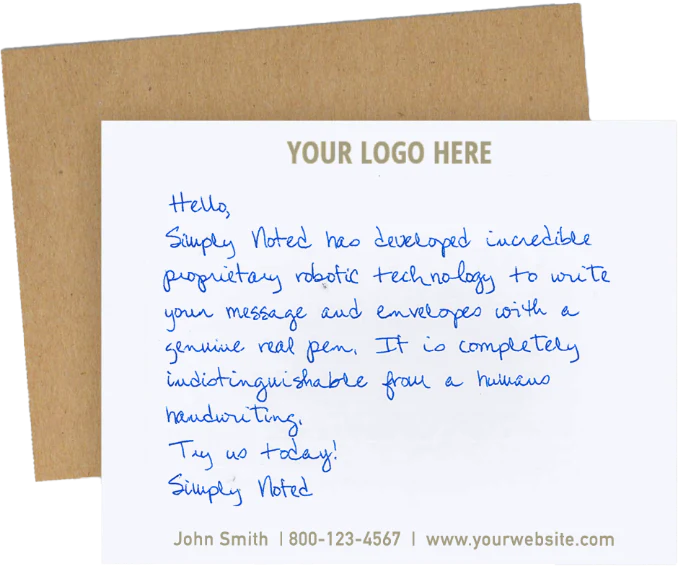
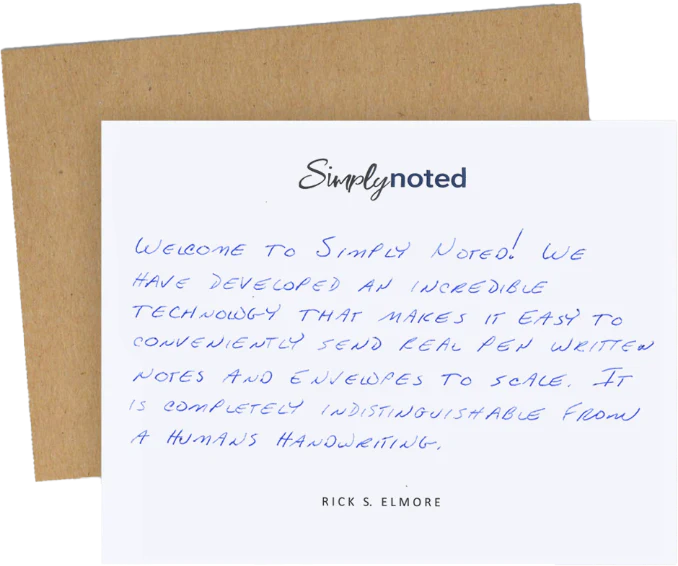
You write your message once—maybe a heartfelt thank-you, a quick note of appreciation, or a follow-up after a meeting—and then the service takes care of the rest. They handwrite it with real pens, stuff the envelope, add the stamp, and mail it out. You get all the warmth and personal touch of a handwritten note, but without the time-suck.
For teams looking to systematize campaigns—such as sending a card to every new customer, every referral, or every webinar attendee—this approach ensures consistent execution without burning anyone out.
Frequently Asked Questions
How do you write a good thank you card?
Keep it simple, specific, and real. Mention exactly what you're grateful for, then tell them why it mattered. Sign it by hand, and you're done. The whole thing should fit on one side of a card.
What's a good short thank-you message?
Short and sweet is perfect. Something like: "Thanks for [specific thing]. It really made a difference because [brief impact]. Appreciate you!" Three to five sentences max.
What is the most beautiful way to say thank you?
The most beautiful thank-yous are the ones that feel real. Mention the exact thing they did, explain how it helped, and sign your name. Sincerity beats eloquence every time.
How do you say thank you short and sweet?
Here's a foolproof formula: "Dear [Name], thank you for [what they did]. It meant a lot to me. Best, [Your Name]." Specific, brief, and personal.