Employee Appreciation Notes: Practical Guide for Better Business Notes
Employee Appreciation Notes: Practical Guide for Better Business Notes
Employee appreciation notes are handwritten messages from managers recognizing contributions, celebrating milestones, or acknowledging effort. Unlike emails or annual reviews, a handwritten note signals genuine attention—it requires time, care, and personal commitment.
If you're searching for "employee appreciation notes," you're likely looking for two things: how to write meaningful messages and when to send them. But beyond the mechanics, you want a practical way to build culture and retention without turning gratitude into a bureaucratic process.
Handwritten notes hit that sweet spot between two key needs:
- Authentic recognition — Employees feel genuinely seen when a manager takes pen to paper
- Scalable consistency — Remote and distributed teams make individual handwritten notes hard to maintain without help
When to Send Appreciation Notes
Timing transforms a nice gesture into a meaningful business tool.
Immediate win moments:
- Project completion or key milestone delivery
- Team member who took on extra work without being asked
- Exceptional customer problem-solving
- Quiet wins that don't make team meetings (closing deals, resolving conflicts, mentoring)
Periodic recognition:
- Work anniversaries or promotions
- End of busy season or successful campaign
- Recovery or course-correction when someone stepped up
- Peer recommendations from other team members
Strategic retention moments:
- High performers vulnerable to poaching
- Long-tenure employees who sustain culture
- Team members returning from leave
- Employees showing up through personal challenges
The golden rule: Don't wait for performance reviews. Handwritten appreciation is most powerful when unexpected and specific. A note weeks after the achievement loses impact, and generic praise ("you're a great team player") feels like boilerplate.
The psychology of handwritten cards shows recipients treat handwritten messages as more authentic than digital alternatives. That perception is earned—handwritten notes cost time and attention, and employees recognize that investment.
How to Write Meaningful Appreciation Notes
Get specific. Name the achievement, explain its impact, and connect it to company values.
Weak: "Thanks for being a great team member."
Strong: "Your approach to customer onboarding caught my attention. You followed up personally with three accounts and caught billing concerns before they became problems. That proactive thinking reduces churn and builds real trust."
Keep it brief. Two or three sentences of genuine insight beat five sentences of padding. Handwritten notes work because they're personal, not because they're exhaustive.
Tie contributions to outcomes. Employees want to understand why their work mattered:
- Did it save time or money?
- Did it improve customer experience?
- Did it strengthen the team?
- Did it uphold a company principle?
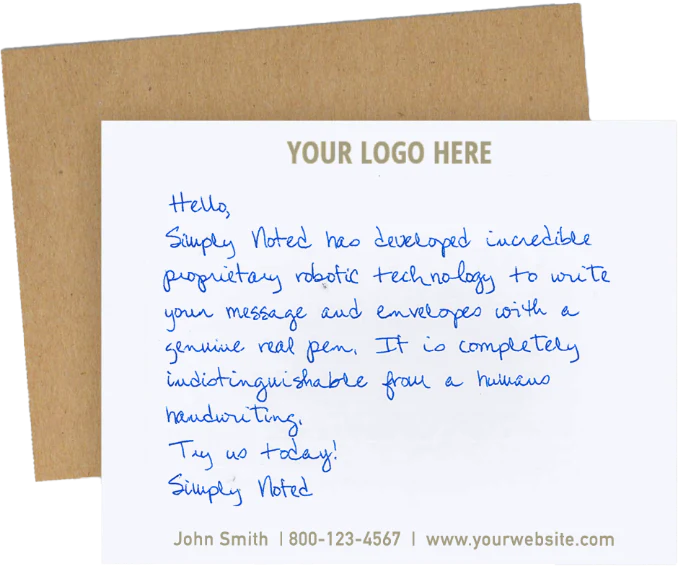
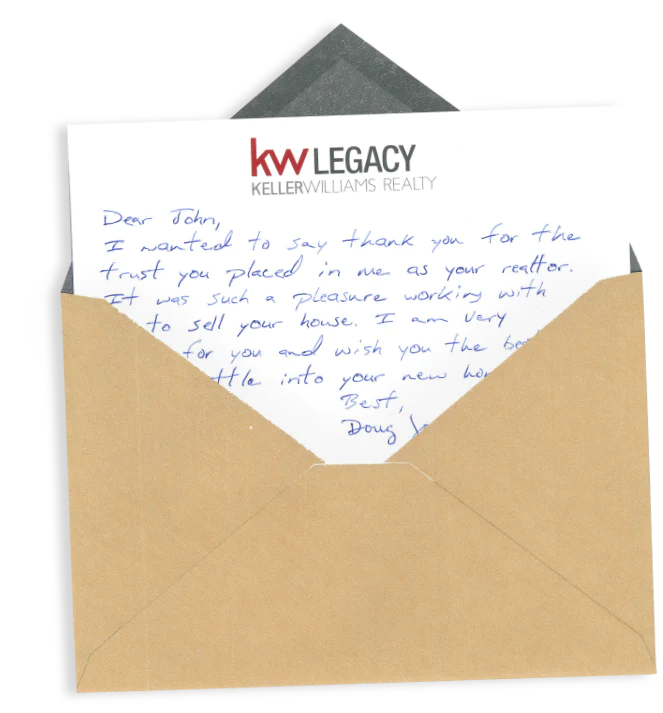
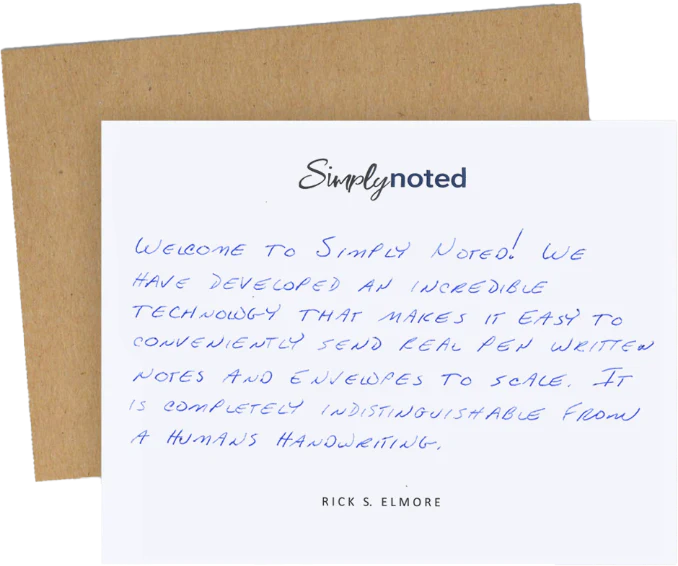
Handwrite it authentically. No printed signatures or digital calligraphy. If using a handwriting service, ensure genuine handwriting and real personalization.
Address the envelope by hand. A handwritten address signals this piece of mail matters more than routine bills and newsletters.
Sign appropriately. Direct managers can sign with just their name. Higher-level leaders may want to add their title for context.
Message Frameworks
For project delivery:
"I wanted to thank you for [specific task]. When [situation], you [action], which saved us [impact]. That kind of [value] is exactly what moves us forward."
For going above and beyond:
"I noticed you stepped in to [specific action] without being asked. That initiative makes a real difference. Thanks for taking ownership."
For resilience:
"I wanted to acknowledge how you handled [situation]. It would have been easy to [react negatively], but instead you [what they did]. That professionalism matters, especially when things get hard."
For long-term contributions:
"As you reach [milestone], I want to tell you what your tenure has meant. You've [specific contribution: mentored others, modeled values, built trust]. Those things don't show up on scorecards but are the foundation of how we work."
For peer recognition:
"[Name] recently told me how you helped them [situation]. I wanted you to know I heard, and I appreciate it. That's what builds a team worth being part of."
Scaling Without Losing Authenticity
You can't handwrite hundreds of notes while running a business. Here's how to scale:
Set a rhythm. Send 2-4 notes per week or 10-15 per month. This makes appreciation routine, not seasonal.
Create a system. Assign note types to days: Mondays for project completions, Wednesdays for peer nominations, Fridays for cultural values. This removes decision fatigue.
Use a handwriting service. If in-house handwriting isn't sustainable, services that handle physical penmanship work well. Your words, your timing, your recognition—the handwriting is just the medium. Simply Noted connects managers' voice to real pen-to-paper execution at scale.
Keep a log. Track who received notes and for what. This prevents overlooking team members and ensures appreciation reaches across levels and departments, not just top performers.
Frequently Asked Questions
What is a good appreciation message?
Good messages are specific about achievements, explain why they matter, and reflect genuine observation. Instead of "Great work on the project," try: "Your attention to detail on the Q2 campaign prevented us from missing the deadline. That thoroughness saves team credibility with clients. Thank you." Specificity turns compliments into evidence you actually noticed.
What is a short appreciation message?
Short and impactful beats long and generic. Aim for 50-100 words. Example: "I wanted to thank you for taking on the customer research project on short notice. Your insights helped us pivot the product roadmap, and your flexibility under pressure is one of the reasons this team functions well."
What makes a good appreciation sentence?
Look for sentences naming both action and impact:
- "Your mentorship with new hires freed me to focus on strategy, and retention is up because of it."
- "When you pushed back on that timeline, you were right—we shipped a better product because of it."
- "The way you handled that customer escalation turned a potential PR problem into a testimonial."
Each ties behavior to business outcome.
Should I use appreciation quotes?
Avoid generic quotes ("Teamwork makes the dream work"). Original observations work better. If using external quotes, connect them specifically to the person's work:
"Maya, I've been thinking about this quote: 'The test of a first-rate intelligence is holding two opposed ideas and still functioning.' That's what you've been doing—balancing shipping fast against quality discipline. That's the thinking we need."